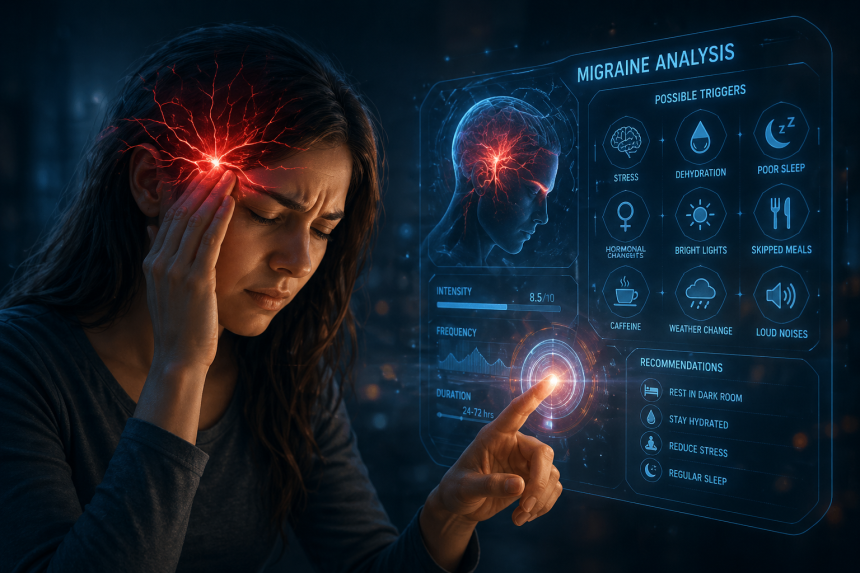

Blue Light Glasses or AI for Office Migraines
Blue light glasses or AI for office migraines? Explore AI and migraine treatment, migraine detection using AI, and smart relief options.
The steady hum of office lights, the glare of multiple monitors, and the creeping pressure behind the eyes have become an unwelcome daily ritual for countless professionals across the USA and Europe. Office migraines do not just cause pain; they steal focus, reduce output, and drain the joy from work. Two distinct solutions have gained attention in recent years: the simple affordability of blue light glasses and the intelligent precision of artificial intelligence. This article compares both approaches, examining the science behind each method. We will explore how migraines affect workplace productivity, investigate AI and migraine treatment advancements, discuss migraine detection using AI, and help you determine which strategy offers the most reliable relief for your specific situation.
Understanding Why Office Environments Trigger Migraines
Modern workplaces are filled with hidden stressors that accumulate throughout the day. Overhead fluorescent tubes, LED desk lamps, computer screens, and even the flicker of older projectors emit light spectra that can overstimulate the visual cortex. For individuals prone to it, this constant sensory input acts like a slow drip of water wearing away at stone. By mid afternoon, the nervous system reaches a tipping point, and head pain erupts. Beyond lighting, other office factors such as poor posture, dehydration from air conditioning, and the mental strain of back to back meetings all contribute. Research from both the USA and Europe indicates that nearly thirty percent of office workers experience at least one episode per month directly linked to their workspace. Consequently, employers have begun searching for accommodations that reduce these triggers without requiring complete office redesigns. This search has led to two radically different tools: passive blue light lenses and active AI powered monitoring systems.
Blue Light Glasses for Office Migraines
Blue light glasses have become a popular first line defense against digital eye strain. These spectacles feature special coatings that absorb or reflect a portion of high energy visible light, typically in the blue wavelength range. The logic is appealing: reduce blue light exposure, reduce visual fatigue, and consequently reduce the likelihood of head pain. Many users report feeling less eye tiredness after wearing them for several hours. However, when scrutinized through clinical trials, the evidence for preventing them specifically remains weak. A well designed study published in 2022 compared blue light glasses to standard clear lenses and found no statistically significant difference in headache frequency between the two groups. Participants in both groups reported modest improvements, suggesting that the act of wearing any glasses, combined with increased awareness of screen time, may produce a small placebo effect. Nevertheless, blue light glasses are inexpensive, widely available, and carry no negative side effects.
AI and Migraine Treatment Through Predictive Intelligence
In stark contrast to passive lens filters, AI and migraine treatment operates proactively rather than reactively. Artificial intelligence systems collect continuous data from wearable sensors, smartphone usage patterns, and environmental monitors. Over several weeks, the AI learns the unique physiological signature that precedes an attack. For example, the system might detect that your heart rate variability drops, your skin temperature rises, and your typing speed slows about forty five minutes before head pain begins. When these patterns emerge, the AI delivers an alert, suggesting a break, a change in lighting, or preventive medication. This predictive capability is something no pair of glasses can replicate. Multiple clinical trials evaluating AI and migraine treatment have documented a forty to fifty percent reduction in attack frequency after three to six months of consistent use. Furthermore, because the system improves with more data, long term users often achieve even better results.AI represents a genuine upgrade from passive protection to active prevention.
Migraine Detection Using AI in Real Time
The technical foundation of this approach rests on migraine detection using AI, which refers to algorithms trained to recognize early warning signs from biological and behavioral data. Unlike a paper diary that relies on memory and subjective pain ratings, migraine detection using AI operates in the background, objectively measuring subtle changes that humans cannot perceive. Consider your morning routine: the AI might notice that on days when you skip breakfast, your blink rate increases and your screen gaze becomes more fixed, both of which correlate with subsequent head pain. By the third such occurrence, the system learns to flag that specific combination of behaviors as high risk. Field studies conducted in corporate offices across Germany and the United Kingdom found that migraine detection using AI achieved accuracy rates above eighty percent for predicting attacks within the next hour. This early warning window is clinically valuable because it allows interventions that can abort or reduce the severity of them. For businesses, implementing migraine detection using AI could reduce unplanned absenteeism and presenteeism, where employees work through pain at reduced capacity.
Digital Migraine Health Solutions Compared by Cost and Convenience
When deciding between glasses and AI, practical factors matter considerably. Blue light glasses cost between twenty and eighty dollars as a one time purchase. They require no batteries, no smartphone pairing, and no learning curve. Anyone can buy a pair and wear them immediately. Digital migraine health solutions, on the other hand, typically involve monthly subscriptions ranging from fifteen to forty dollars, plus optional wearable devices costing one hundred fifty to three hundred dollars. They require consistent charging, app updates, and a willingness to wear a sensor on the wrist or behind the ear. However, digital migraine health solutions offer something glasses cannot: personalized, actionable data. A user can see exactly which activities, times of day, or environmental conditions correlate with their attacks. Over time, this awareness reduces anxiety because the person moves from feeling randomly victimized to feeling scientifically informed. Many European employers now subsidize digital migraine health solutions as part of workplace wellness budgets, recognizing that the annual cost of subscriptions is far lower than the productivity losses caused by untreated migraines. For the individual worker, the choice depends on attack frequency. Occasional headaches may respond to glasses. Frequent, disabling episodes justify the investment in AI.
AI Healthcare for Headaches and Long Term Workplace Benefits
The conversation extends beyond individual relief to organizational health. AI healthcare for headaches provides employers with anonymized, aggregated data about environmental triggers within their offices. For instance, a system might reveal these headaches are three times more common in cubicles under a specific bank of fluorescent lights or in meeting rooms without windows. Facilities managers can then replace those lights, adjust thermostat settings, or install smart blinds. This feedback loop creates healthier workspaces for everyone, not just those who suffer from head pain. Several companies in the USA have piloted AI healthcare for headaches programs and reported measurable improvements in employee satisfaction and reduced sick leave usage. Furthermore, employees appreciate when their employer invests in their well being, which boosts retention and morale. While blue light glasses addresses only the individual's visual channel, AI healthcare for headaches transforms the entire work environment. As more organizations collect data across hundreds of desks, machine learning models will identify patterns that have never been documented before, potentially uncovering novel migraine triggers such as specific air filtration systems or carpet cleaning chemicals.
Smart Migraine Tracking Systems as a Daily Companion
For the individual navigating a busy office schedule, smart migraine tracking systems offer a practical middle path. These systems typically consist of a smartphone application paired with a small wearable or a smartwatch integration. The user logs each episode, noting duration, intensity, and suspected triggers. Meanwhile, the wearable collects heart rate, sleep quality, step count, and sometimes even ambient light levels. The AI then searches for correlations, displaying the results in simple charts. Many users report that the act of tracking alone reduces their episode frequency because they become more mindful of early warning signs. Additionally, smart migraine tracking systems can integrate with calendar apps, flagging high stress days as elevated risk periods. Some advanced systems even suggest optimal times for taking breaks or performing relaxation exercises based on predicted vulnerability windows. Unlike blue light glasses, which are static, smart migraine tracking systems evolve with the user. As seasons change, work schedules shift, or medications adjust, the AI relearns new patterns. This adaptability is crucial because they are not static conditions; their triggers and manifestations change over years and decades.
AI in Migraine Diagnosis and Collaborative Care
Another significant advantage of artificial intelligence lies in its ability to support medical professionals. AI in migraine diagnosis refers to systems that analyze patient generated data to help doctors make more accurate assessments. Traditionally, a neurologist asks, "How many headaches do you have per month?" and the patient guesses based on imperfect memory. With AI in migraine diagnosis, the doctor opens an app and sees a precise count of every episode, complete with timestamps, duration, associated symptoms, and potential triggers. This objective record eliminates recall bias and allows for much more targeted treatment plans. Some platforms even integrate with electronic health records, automatically updating the patient's chart before each appointment. For the patient, this means less time describing symptoms and more time discussing solutions. For the doctor, it means confidence that prescriptions are based on accurate data. While blue light glasses require no medical input at all, AI in migraine diagnosis creates a collaborative triangle between the patient, the physician, and the intelligent system. This partnership is particularly valuable for individuals who have tried multiple medications without success, because the AI can identify which environmental or behavioral factors might be undermining pharmaceutical efficacy.
Practical Guidance for Choosing Your Path
So which solution should you implement first? Begin by honestly assessing your pattern. If you experience one to two migraines per month, primarily during long screen sessions, and over the counter pain relievers usually stop them, start with blue light glasses. Purchase a pair with verified blue blocking certification rather than cheap online imitations. Wear them consistently for two weeks and track your results. If you notice meaningful improvement, you may have found your answer. However, if you experience four or more per month, if attacks cause you to leave work or cancel evening plans, or if medications provide incomplete relief, invest in an AI powered solution. Download a reputable tracking application first, as many offer free tiers. Spend two months logging every episode and wearing a smartwatch if you have one. Review the AI generated insights and share them with your doctor. Then consider upgrading to a dedicated wearable if the data suggests physiological precursors. Do not discard your blue light glasses entirely; wear them during known high risk activities such as video calls or late afternoon computer work. The most effective long term strategy combines simple environmental adjustments with smart technology, because they rarely have a single cause.
Frequently Asked Questions
Can blue light glasses alone eliminate office related migraines?
Blue light glasses reduce visual strain but rarely eliminate head pain entirely. Most clinical studies show a modest reduction in eye discomfort rather than a significant decrease in attack frequency. For complete prevention, environmental modifications and behavioral changes are usually necessary alongside any optical tool.
How accurate is migraine detection using AI for predicting attacks?
Current migraine detection using AI systems achieve accuracy between seventy five and eighty five percent for predicting episodes thirty to sixty minutes in advance. Accuracy improves significantly after three to six months of continuous data collection because the algorithm learns your unique physiological patterns more precisely.
Are AI based migraine tools covered by workplace wellness programs?
Some employers in the USA and Europe have begun subsidizing AI tools as part of wellness benefits. Companies in Germany, the Netherlands, and California lead this trend. Check with your human resources department, as coverage varies widely by industry and region.
Do I need a doctor's prescription for smart migraine tracking systems?
No prescription is required for consumer grade tracking applications and wearables. However, clinically validated devices that make medical claims may require physician involvement. For most office workers, over the counter solutions are perfectly appropriate and effective.
What is the average cost difference between glasses and AI systems?
Blue light glasses cost twenty to eighty dollars as a one time purchase. AI systems average fifteen to forty dollars monthly, plus optional wearable devices costing one hundred fifty to three hundred dollars. Over two years, AI systems total roughly four hundred to twelve hundred dollars.
Conclusion
The decision between blue light glasses and artificial intelligence ultimately reflects how you wish to relate to your own body. Do you prefer simplicity, affordability, and a passive tool that requires nothing more than putting on a pair of frames? Or are you ready to embrace active, intelligent monitoring that learns your unique patterns and warns you before pain arrives? For the millions of office workers across the USA and Europe who lose precious days each month to throbbing migraines, the answer increasingly favors intelligence over glass. Blue light glasses offer a helpful first step, a low cost signal to yourself that you care about your visual comfort. Yet they cannot predict, cannot adapt, and cannot share data with your doctor. AI can do all of these things. Therefore, the most empowered approach is not to choose one over the other but to use both strategically. Wear blue light glasses during your daily screen work. Let a smart tracking system monitor your unique signatures. Share your data with a headache specialist. And most importantly, refuse to accept them as an unavoidable price of office life. With today's technology, you have more control than ever before. Start paying attention, start tracking, and start believing that a clearer, sharper tomorrow is within your reach.



Fluff Pulp Price Trend Q2 2026 | Global Price Trends, Forecast, Chart,...

Lux Live CBD Gummies: Is It Worth Buying? Complete Supplement Review
Lux Live CBD Gummies are marketed as a convenient, chewable wellness supplement containing...