
Biogas Plants: Transforming Organic Waste into Sustainable Energy
As energy costs continue to rise and environmental concerns become more pressing, businesses, farmers, and municipalities are actively searching for sustainable alternatives to conventional fuel sources.
One of the most effective and environmentally responsible solutions available today is the biogas plant. By converting organic waste into renewable energy, biogas plants not only reduce waste disposal challenges but also create valuable resources that support long-term sustainability.
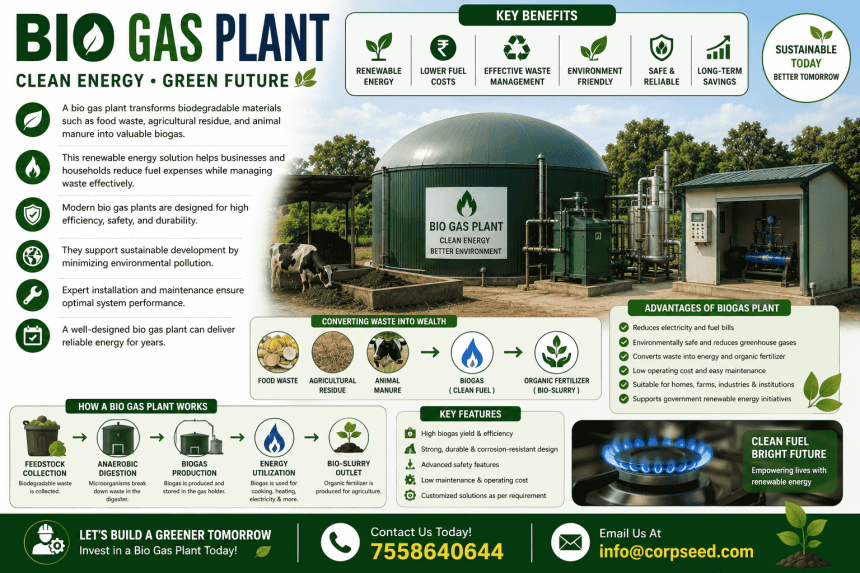
What is a Biogas Plant?A biogas plant is a system designed to convert biodegradable materials such as food waste, agricultural residue, animal manure, and organic industrial waste into biogas through a natural biological process known as anaerobic digestion. During this process, microorganisms break down organic matter in the absence of oxygen, producing a methane-rich gas that can be used for cooking, heating, electricity generation, and industrial applications.
In addition to biogas, the process also produces nutrient-rich digestate, which can be used as an organic fertilizer for agricultural purposes.
Why is the Demand for Biogas Plants Increasing?The growing focus on renewable energy and sustainable waste management has significantly increased the demand for biogas plants across various sectors. Governments, industries, and agricultural businesses are recognizing the economic and environmental advantages of utilizing organic waste as a source of energy.
Several factors driving this growth include:
- Rising fuel and electricity costs
- Increasing environmental regulations
- Growing awareness of renewable energy solutions
- Need for efficient waste management systems
- Demand for organic fertilizers in agriculture
As a result, biogas technology is becoming a preferred investment for organizations seeking both profitability and sustainability.
How Does a Biogas Plant Work?The operation of a biogas plant involves several stages that work together to efficiently convert waste into energy.
1. Feedstock CollectionOrganic waste materials such as cow dung, food waste, crop residue, and industrial organic waste are collected and prepared for processing.
2. Anaerobic DigestionThe collected feedstock is introduced into a sealed digester where naturally occurring microorganisms decompose the organic matter in oxygen-free conditions.
3. Biogas ProductionAs the waste breaks down, methane-rich biogas is generated and collected for storage and utilization.
4. Energy UtilizationThe produced biogas can be used directly as fuel or converted into electricity and heat through specialized equipment.
5. Digestate RecoveryThe remaining digestate is processed into high-quality organic fertilizer, creating an additional source of value from the waste management process.
Key Benefits of Installing a Biogas PlantRenewable Energy GenerationBiogas plants provide a reliable source of renewable energy that can significantly reduce dependence on fossil fuels. This helps businesses and households lower their energy expenses while contributing to a cleaner environment.
Effective Waste ManagementOrganic waste often creates disposal challenges and environmental concerns. A biogas plant converts this waste into useful products, reducing landfill dependency and minimizing pollution.
Lower Operating CostsBy producing energy on-site, organizations can reduce fuel purchases and electricity expenses. Over time, these savings can offset the initial investment required for plant installation.
Environmental SustainabilityBiogas plants help reduce greenhouse gas emissions by preventing the uncontrolled decomposition of organic waste. They also support circular economy practices by converting waste into valuable resources.
Organic Fertilizer ProductionThe digestate generated during the biogas production process serves as a nutrient-rich organic fertilizer that improves soil health and agricultural productivity.
Applications of Biogas PlantsBiogas plants are highly versatile and can be installed for a wide range of applications.
Agricultural SectorFarmers and dairy operators use gobar gas plants and agricultural biogas systems to process animal manure and crop residue while generating energy and organic fertilizer.
Food Processing IndustriesFood manufacturing facilities generate significant amounts of organic waste that can be effectively utilized for biogas production.
Municipal Waste ManagementUrban local bodies and municipalities are increasingly adopting biogas technology to manage food waste and organic municipal waste streams.
Commercial and Institutional FacilitiesHotels, restaurants, educational institutions, and hospitals can benefit from on-site biogas systems that reduce waste disposal costs and energy consumption.
Factors to Consider Before Setting Up a Biogas PlantA successful biogas project requires careful planning and professional execution. Some important considerations include:
- Availability and consistency of feedstock
- Plant capacity requirements
- Technology selection
- Site suitability
- Regulatory compliance
- Budget and operational costs
- Future expansion possibilities
Working with experienced biogas plant consultants and installation experts ensures that the system is designed to achieve maximum efficiency and long-term reliability.
The Future of Biogas TechnologyWith growing emphasis on renewable energy, carbon reduction, and sustainable waste management, biogas technology is expected to play an increasingly important role in the global energy landscape. Modern biogas plants now incorporate advanced monitoring systems, automation, and optimized digestion technologies to improve gas yield and operational performance.
Businesses investing in biogas solutions today are positioning themselves for a future that prioritizes energy independence, environmental responsibility, and resource efficiency.
ConclusionA biogas plant is much more than a waste treatment system—it is a complete renewable energy solution that transforms organic waste into valuable resources. From reducing energy costs and improving waste management to generating organic fertilizer and supporting environmental sustainability, the benefits are substantial.
Whether for agricultural, industrial, commercial, or municipal applications, a professionally designed biogas plant can provide reliable energy, long-term savings, and significant environmental advantages. As the demand for clean energy continues to grow, investing in biogas technology represents a smart and sustainable choice for the future.
Buy Fanvue Account Transfer Legality Discussion: The Complete Expert G...
Buy Fanvue Account Transfer Legality Discussion: The Complete Expert Guide Fanvue has qui...

Practical Cloud Computing Training: The Key Link Between Learning and...
Cloud computing has emerged as one of the top popular technologies in this day and age of...

Buy How to Avoid LinkedIn Account Access Scams: The Complete Expert Gu...
Buy How to Avoid LinkedIn Account Access Scams: The Complete Expert Guide LinkedIn has be...
Buy Fanvue Account Access Fraud Warning: The Complete Expert Guide
Buy Fanvue Account Access Fraud Warning: The Complete Expert Guide In today’s digital eco...
Buy LinkedIn Account Fraud Warning Signs: The Complete Expert Guide
Buy LinkedIn Account Fraud Warning Signs: The Complete Expert Guide LinkedIn has become t...