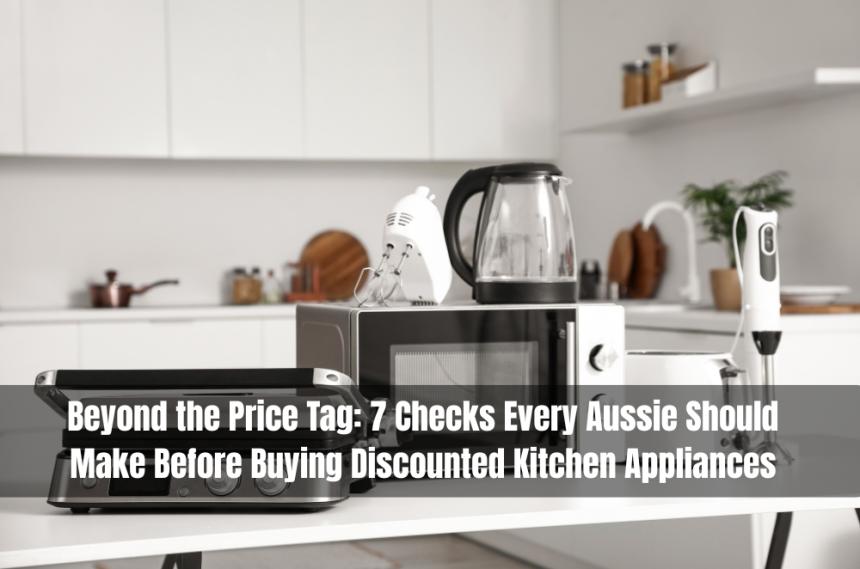

Beyond the Price Tag: 7 Checks Every Aussie Should Make Before Buying Discounted Kitchen Appliances
Buying kitchen appliances on sale? Discover 7 practical checks—energy ratings, warranties, delivery traps, and more—to avoid costly regrets.
Grabbing a bargain on a new fridge, oven, or dishwasher feels great—until the power bill spikes or the appliance breaks a week after the warranty expires. Latest kitchen appliances discounts
can be genuine money-savers, but only when you look beyond the price tag. Use the seven checks below to make sure the “deal” you’re eyeing really stacks up for the long haul.
1. Look for the Energy Rating Label First
Australia’s comparative energy-consumption label turns a confusing jumble of kilowatt-hours into an easy-to-read star system. More stars generally equal lower running costs over the life of the appliance. According to the Australian Government’s Energy Rating program, the difference between a three-star and a five-star fridge can translate into hundreds of dollars in electricity over a decade.
Quick pointers:
• Compare models of similar capacity—bigger units often use more power regardless of stars.
• Check the annual kWh figure; in some product categories a half-star jump may only save a few dollars a year.
• Consider local climate: hot, humid zones can amplify running costs for fridges and freezers.
If a discounted model has a lower star count, calculate whether the upfront saving outweighs the future energy spend.
2. Check If a Bundle Really Saves You Money
Retailers love bundling ovens, cooktops and rangehoods under an eye-catching “package price”. Sometimes the bundle genuinely cuts costs, especially when installation is included. Other times it ropes you into paying for features you won’t use. For a deeper dive, see this practical guide on whether appliance bundles are worth it. Then run the numbers yourself:
• Compare the bundle price against buying comparable standalone models.
• Confirm that every item suits your kitchen’s size and power requirements—replacing a gas cooktop with induction later can erase any initial saving.
• Make sure the warranty period matches across all items; a single shorter warranty can become the weakest link.
3. Compare Real Lifetime Costs (Not Just Shelf Price)
A lower sticker price can hide future expenses—higher electricity usage, replacement filters or costly spare parts. Weigh these factors against the discount by using a simple lifetime-cost comparison.
FactorDiscounted ModelHigher-Rated ModelWhy It MattersUpfront price$900$1,200Initial cash outlayAnnual running cost*$130$80Energy bills over 10 yrs = $500 differenceLikely filter / part costs$200$120Some bargain dishwashers need pricier filtersWarranty length12 months24 monthsExtra cover reduces risk of early repairsEstimated 10-year outlay$2,400$2,120Cheaper ticket ends up dearer
*Running-cost figures illustrative only—use each model’s kWh and local tariff for accuracy.
When the lifetime total tips in favour of the “dearer” product, find discounted kitchen appliances that still keep costs down by sourcing them from a retailer with a wide range. That way, you nab both a lower ticket price and better long-term value.
4. Read the Fine Print on Warranties & Returns
Under Australian Consumer Law, major appliances should last a “reasonable” period, but individual manufacturer warranties define the hassle you’ll face if something does go wrong. Check:
• Who pays freight for warranty returns—some budget brands make the customer ship bulky goods at their own cost.
• Whether “in-home” service actually covers regional postcodes.
• If extended coverage is offered by the maker, the retailer or an insurance third party; each has different claim pathways.
If printed warranty terms are hard to find online, treat that as a red flag.
5. Factor in Delivery, Installation & Old Appliance Removal
That $200 saving can vanish once you add:
• Paid delivery beyond metro zones.
• Professional installation (essential for gas or hard-wired electric ovens).
• Disposal or recycling fees for the old unit.
Ask for a complete quote that spells out every logistical extra before you commit.
6. Measure Twice, Order Once: Space & Ventilation Matters
It sounds obvious, yet “it doesn’t fit” is a top cause of returns. Grab a tape measure and note:
Height, width & depth
Leave wiggle room for power cords, water hoses, or door swing clearance.
Ventilation gaps
Fridges and dishwashers need manufacturer-specified airflow to avoid overheating and premature compressor failure.
Doorways & stairwells
Your new 90 cm oven might fit the cavity but not the front door. Delivery crews may charge extra—or refuse—if easy access isn’t possible.
7. Think About After-Sales Support & Spare Parts Availability
A rock-bottom price is meaningless if replacement shelves or filters are impossible to source two years later. Research:
• Local service agent networks for the brand.
• Online availability of common consumables (seals, bulbs, trays).
• User reviews that mention parts wait times.
Brands with an Australian parts warehouse often publish the detail on their support pages—worth a quick check before you hit “buy”.
Final Thoughts
Discounted kitchen appliances can absolutely be good investments, but only when energy efficiency, warranties, delivery logistics and ongoing support line up with the initial saving. Use the seven checks above as a quick reference before you click “Checkout” or tap your card instore. A few extra minutes of homework today can save hundreds of dollars—and a lot of frustration—over the next decade.
FundedFirm vs Summit Strike: Which Prop Trading Firm Reigns Supreme in...
In the world of forex and prop trading, two names have recently grabbed traders’ attention...

Migliori Casino Online: Guida Completa per Scegliere la Piattaforma Gi...
Migliori Casino Online: Guida Completa per Scegliere la Piattaforma Giusta


انٹونی سی سوٹن کی کتاب "امریکہ سیکرٹ اسٹیبلشمنٹ" 'آرڈر آف سکل اینڈ بون...

Migliori Casino Online: Guida Completa per Scegliere la Piattaforma Id...
Migliori Casino Online: Guida Completa per Scegliere la Piattaforma Ideale
Personal Watercraft Market Industry Outlook Points to USD 3.6 Billion...
A forecast value of USD 3.6 billion by 2027 places the Personal Watercraft Market on a mea...