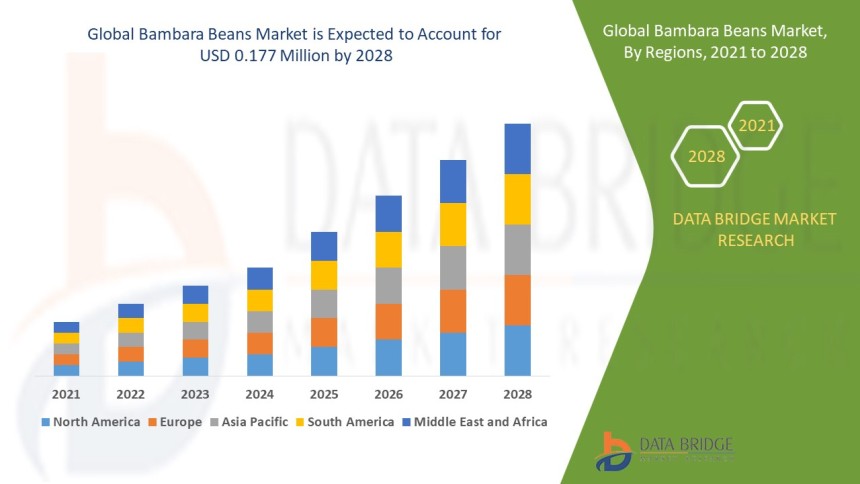

Bambara Beans Market: Growth, Trends, and Opportunities
The Global Bambara Beans Market is emerging as a promising segment in the global agricultural and food industry due to rising demand for nutritious, sustainable, and plant-based protein sources. Often referred to as a “complete food,” Bambara beans are valued for their high protein, dietary fiber, and essential micronutrient content, making them an important crop in regions facing food security challenges. This article explores the current market landscape, key drivers, challenges, and future growth opportunities of the global Bambara beans industry. Market Overview Bambara beans, scientifically known as Vigna subterranea, are drought-resistant legumes traditionally cultivated in sub-Saharan Africa. They are adaptable to harsh climates, poor soil conditions, and limited water availability, which makes them a critical crop in regions prone to climate variability. Over the past decade, increasing awareness about their nutritional profile has led to a surge in demand both locally and internationally. These beans are consumed in multiple forms, including whole beans, flour, and processed products. In addition to human consumption, Bambara beans are also used in animal feed and as ingredients in nutraceuticals due to their high protein and amino acid content. Key Market Drivers Several factors are fueling growth in the global Bambara beans market: 1. Nutritional Value and Health Benefits Bambara beans are rich in protein, complex carbohydrates, fiber, and essential minerals such as calcium, potassium, and iron. Their low glycemic index and high protein content make them a popular choice among health-conscious consumers, vegetarians, and vegans. Moreover, studies suggest that Bambara beans may help regulate blood sugar levels and improve gut health, further increasing their appeal in functional foods and nutraceutical markets. 2. Climate Resilience and Sustainable Agriculture One of the most significant advantages of Bambara beans is their ability to thrive in arid and semi-arid regions with minimal inputs. Unlike many other legumes, they require low fertilizer and water, making them a sustainable crop option for regions affected by climate change. This has drawn attention from governments and NGOs promoting climate-resilient agriculture to ensure food security. 3. Rising Demand for Plant-Based Proteins Global trends toward plant-based diets are fueling demand for legumes like Bambara beans. Increasing vegan and vegetarian populations, coupled with the popularity of high-protein diets, have created a growing market for legumes as an alternative to animal-based proteins. 4. Government Initiatives and Food Security Programs Many African countries have recognized Bambara beans as a strategic crop for improving nutrition and reducing hunger. Governments, agricultural boards, and international organizations are promoting the cultivation of these beans through training, subsidies, and awareness programs, which are helping to stabilize production and expand market reach. Market Segmentation The global Bambara beans market can be segmented based on type, form, and application: By Type Black Bambara Beans: Popular for their high protein content and antioxidant properties. Red Bambara Beans: Valued for their taste and nutritional benefits. Brown Bambara Beans: Commonly used in traditional dishes and local markets. By Form Whole Beans: Widely used in soups, stews, and snacks. Flour: Processed into flour for bakery products, cereals, and baby foods. Processed Products: Ready-to-eat or pre-cooked meals enriched with Bambara beans. By Application Food & Beverages: Traditional dishes, soups, snacks, and health foods. Animal Feed: Used as a protein-rich ingredient in livestock feed. Nutraceuticals & Supplements: Functional foods and protein supplements. Regional Insights Africa Africa is the dominant market for Bambara beans, with Nigeria, Burkina Faso, Ghana, and Mali being the leading producers. The crop’s adaptability to dry climates and nutrient-rich profile makes it a staple food and cash crop. Local consumption remains high, while surplus production is increasingly entering export markets. Europe and North America In Europe and North America, the market is emerging, driven by increasing awareness of plant-based diets, health foods, and sustainable agriculture. Imports from Africa and product innovation, such as Bambara bean flour and protein powders, are driving adoption in these regions. Asia-Pacific In Asia-Pacific, countries like India and China are witnessing growing interest due to rising health awareness and demand for plant-based proteins. However, market penetration is still in its early stages compared to Africa and Western markets. Challenges Facing the Market Despite the promising growth, the global Bambara beans market faces several challenges: Limited Awareness in Developed Markets: Many consumers are still unfamiliar with Bambara beans, limiting demand outside Africa. Post-Harvest Losses: Poor storage and handling practices in producing countries can lead to significant losses. Inconsistent Supply Chains: Fragmented farming practices and low mechanization hinder large-scale commercialization. Price Volatility: Market prices can fluctuate due to seasonal production and weather conditions, affecting both producers and exporters. Addressing these challenges requires strategic interventions, including improved supply chain infrastructure, awareness campaigns, and investment in processing and value addition. Opportunities and Future Outlook The global Bambara beans market is expected to continue growing over the next decade. Key opportunities include: Product Diversification: Developing value-added products such as ready-to-eat meals, protein powders, and gluten-free flours. Export Expansion: Strengthening international trade links to meet growing demand in Europe, North America, and Asia-Pacific. Sustainable Agriculture Initiatives: Promoting Bambara beans as a climate-resilient crop to improve food security. Research and Innovation: Breeding programs to enhance yield, nutritional content, and pest resistance. With increasing global demand for nutritious and sustainable food sources, Bambara beans are poised to play a pivotal role in future food systems. Conclusion The Global Bambara Beans Market presents a promising opportunity for growers, investors, and food manufacturers. Driven by nutritional benefits, climate resilience, and rising global demand for plant-based proteins, Bambara beans are transitioning from a traditional staple to a global commodity. With strategic investments in production, awareness, and processing, the market is expected to experience steady growth, contributing to both food security and economic development worldwide. FAQ Q1. What are Bambara beans? Bambara beans are drought-resistant legumes rich in protein, fiber, and essential nutrients, traditionally grown in sub-Saharan Africa. Q2. Why are Bambara beans important for food security? They are highly adaptable to harsh climates and poor soils, providing a reliable source of nutrition in regions vulnerable to food scarcity. Q3. What are the main uses of Bambara beans? They are used in food & beverages, animal feed, and nutraceutical products, including whole beans, flour, and processed foods. Q4. Which regions dominate the Bambara beans market? Africa is the leading market, particularly Nigeria, Ghana, and Burkina Faso, while Europe and North America are emerging markets. Q5. What are the challenges in the Bambara beans market? Challenges include limited awareness in developed markets, post-harvest losses, inconsistent supply chains, and price volatility.
White Top Linerboard Price Trend Q2 2026 | Global Price Trends, Foreca...

How to Find the Best Large Leather Desk Mat for Your Workspace
A well-organized desk can make daily work more comfortable and help you keep essential ite...


Concrete Technology Laboratory Learning at Terna Engineering College i...