
ASL Translator – Bridging the Communication Gap Between the Deaf and Hearing Worlds
SLTranslator is an innovative online platform designed to bridge the communication gap between the hearing and the deaf or hard-of-hearing communities by providing accurate and efficient sign language translation.
In today’s fast-moving, tech-driven society, communication plays a central role in connecting people from different backgrounds, cultures, and communities. However, for the Deaf and hard-of-hearing community, communication with the hearing world can be challenging without a common language. This is where ASL Translators—both human and digital—play an essential role. ASL, or American Sign Language, is a complete, natural language used by millions of Deaf and hearing-impaired individuals in North America. With the growth of artificial intelligence (AI) and advanced computer vision, ASL translator tools and applications are transforming how people bridge this gap, making communication more inclusive than ever.
This article explores everything about ASL translators—what they are, how they work, their benefits, challenges, and the evolving technology behind digital sign language translation.
An ASL Translator is a person or technology that converts spoken or written English into American Sign Language, and sometimes vice versa. Traditionally, human ASL interpreters have served this purpose, helping Deaf and hearing people communicate in settings such as schools, workplaces, hospitals, and public events. However, in the digital age, automated ASL translators—web-based tools, mobile apps, and software systems—have emerged, powered by artificial intelligence and computer vision.
These digital translators can interpret text or speech input and convert it into ASL signs using animations, 3D avatars, or videos of real interpreters. Similarly, some advanced systems can recognize hand gestures from a camera and translate them into written or spoken English, effectively bridging two different modes of communication.
Before diving deeper into ASL translators, it’s essential to understand ASL itself. American Sign Language is not just a visual form of English—it is a distinct language with its own grammar, syntax, and linguistic structure. ASL has its roots in French Sign Language and has evolved over centuries into a unique language used widely across the United States and parts of Canada.
Key characteristics of ASL include:
- Visual and gestural communication: It uses hand shapes, facial expressions, and body movements.
- Spatial grammar: ASL uses space to indicate relationships between subjects, objects, and actions.
- Non-manual signals: Eye gaze, facial expression, and mouth movement are integral parts of meaning.
- Unique syntax: ASL grammar is not based on English; for example, ASL often uses “topic–comment” structure rather than subject–verb–object.
These features make ASL rich and expressive but also complex for computers and non-signers to interpret—hence the need for advanced ASL translator tools.
There are two main types of ASL translators: human translators and digital translators.
1. Human ASL TranslatorsHuman ASL translators or interpreters are professionally trained individuals fluent in both English and American Sign Language. They work in various settings:
- Educational institutions – assisting Deaf students in classrooms.
- Hospitals and medical offices – ensuring clear communication between patients and healthcare professionals.
- Courtrooms and public services – facilitating understanding in legal or civic situations.
- Business meetings and events – enabling inclusive participation.
Human translators provide context, emotional tone, and cultural accuracy that no machine can perfectly replicate. Their empathy and adaptability make them invaluable, especially in sensitive situations like therapy or legal interpretation.
2. Digital ASL TranslatorsWith rapid advances in AI and machine learning, digital ASL translators are becoming increasingly sophisticated. These systems can take several forms:
- Text-to-ASL Translators: Convert typed English text into animated sign language using avatars or video demonstrations.
- Speech-to-ASL Translators: Recognize spoken English and translate it into signs in real-time.
- Sign-to-Text Translators: Use cameras and gesture recognition to interpret ASL signs and convert them into written or spoken English.
One popular example is SLTranslator.com, a web-based tool that allows users to translate text into sign language instantly using animated visuals. Platforms like this make learning and using ASL more accessible to everyone.
The functionality of digital ASL translators depends on a combination of advanced technologies:
- Computer Vision: Cameras capture hand gestures, facial expressions, and movements. The system then recognizes and tracks these features in real-time.
- Machine Learning & AI: Trained on large datasets of ASL gestures and English words, AI models learn to associate visual patterns with linguistic meaning.
- Natural Language Processing (NLP): NLP helps in understanding the grammatical and contextual structure of English sentences, which are then mapped to appropriate ASL signs.
- 3D Animation & Avatars: To present translations, the system uses animated avatars that perform the correct ASL signs, ensuring natural movement and facial expression.
- Speech Recognition (for voice input): Converts spoken words into text, which the system then translates into ASL.
Together, these technologies make digital ASL translators possible, offering real-time communication and educational support.
The growing adoption of ASL translators brings numerous advantages to individuals and society as a whole:
1. Promotes InclusivityASL translators make communication accessible to Deaf and hard-of-hearing individuals, enabling them to participate fully in education, work, healthcare, and social life. Digital translators also help hearing individuals learn and understand ASL, fostering mutual respect.
2. Real-Time CommunicationAutomated translators can instantly convert speech or text into signs (and vice versa), breaking down communication barriers in everyday interactions, such as in customer service or emergency assistance.
3. Cost-Effective AccessibilityWhile human interpreters are indispensable in many cases, they can be costly or unavailable on short notice. Digital ASL translators provide an affordable, 24/7 alternative for basic communication needs.
4. Educational ToolASL translation apps help students and language learners understand sign language grammar, vocabulary, and cultural context through interactive visuals and exercises.
5. Global AwarenessBy popularizing ASL tools online, awareness about sign languages and Deaf culture is spreading worldwide, promoting empathy and reducing stigma.
Despite remarkable progress, ASL translators—especially automated ones—still face significant challenges.
1. Complex Grammar and Regional VariationsASL is not a word-for-word translation of English. Its grammar, regional dialects, and expressive nuances are complex for machines to replicate. Current tools often translate literal meanings but miss cultural or emotional depth.
2. Gesture Recognition AccuracyHand positioning, movement speed, and camera angle can all affect translation accuracy. AI models must be trained on diverse datasets to recognize subtle differences in gestures.
3. Non-Manual CuesFacial expressions and body posture are crucial in ASL grammar. Many digital translators struggle to interpret or generate these cues correctly, reducing translation quality.
4. Context UnderstandingAI systems still find it difficult to interpret context, tone, or idiomatic expressions, which human translators handle naturally.
5. Accessibility and AwarenessNot everyone knows about ASL translator tools or how to use them effectively. Increasing awareness and improving usability are ongoing goals.
Several online platforms and mobile applications aim to make ASL translation more accessible. Some noteworthy examples include:
- SLTranslator.com – A free, web-based ASL translation tool that instantly converts English text into animated sign language visuals. It’s easy to use and helps both learners and communicators bridge the gap between languages.
- 👉 Visit: https://sltranslator.com/
- Hand Talk App – Uses a 3D virtual interpreter named Hugo to translate text and speech into ASL and Brazilian Sign Language (Libras).
- SignAll – An AI-based system that translates sign language gestures into text using cameras and sensors.
- Lingvano – Focused on teaching ASL, with lessons, quizzes, and phrase translations.
- Google’s Sign Language Recognition Projects – Experimental systems using AI to understand sign language via computer vision.
These tools are still evolving but have already made remarkable contributions to communication accessibility.
Artificial Intelligence is the driving force behind most modern ASL translators. AI models trained on massive datasets of gestures and linguistic patterns allow computers to understand and generate sign language with growing accuracy.
Key AI innovations include:
- Deep Learning Networks: Used to identify and classify gestures with precision.
- Motion Capture Technology: Helps generate realistic animations for signing avatars.
- Neural Machine Translation (NMT): Converts between spoken/written English and ASL syntax.
- Real-Time Gesture Recognition: Enables live communication through webcams or wearable sensors.
As AI improves, future ASL translators may provide seamless, natural two-way communication—similar to real human interpreters.
The future of ASL translation is bright and filled with possibilities. Ongoing research aims to:
- Improve real-time gesture recognition using advanced 3D cameras.
- Incorporate emotional intelligence and facial expression mapping.
- Expand databases to include regional ASL variations.
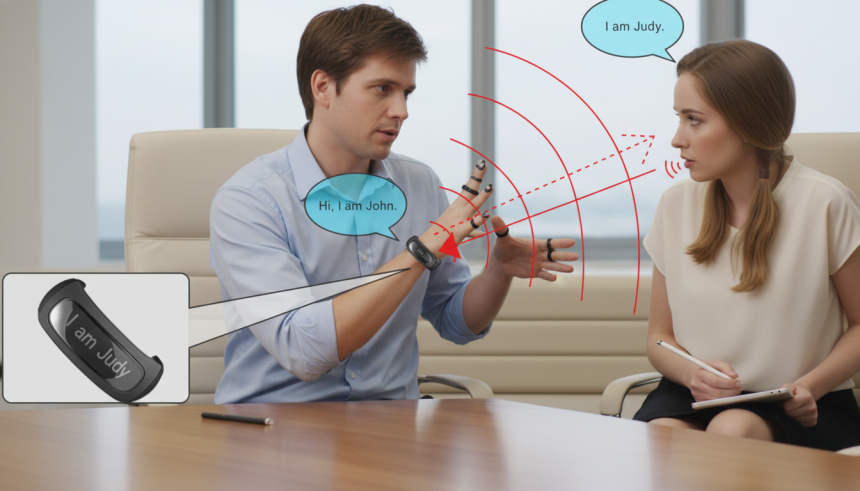
- Develop wearable translation devices, such as smart gloves or AR glasses.
- Integrate ASL translation into social media and video conferencing platforms.
Ultimately, the goal is universal accessibility—a world where language barriers, including sign language differences, no longer prevent people from understanding one another.
Communication is a human right. For millions of Deaf and hard-of-hearing individuals, language access means access to education, employment, healthcare, and community life. ASL translators—human and digital—empower people by removing barriers that once excluded them from mainstream society.
Moreover, for hearing individuals, ASL translators open a window into a beautiful visual language and culture, enriching understanding and empathy across communities.
As technology advances, ASL translators will not replace human interpreters but rather complement them, extending accessibility and awareness to every corner of the world.
The ASL Translator is more than just a communication tool—it is a bridge to inclusion, equality, and human connection. From professional human interpreters to cutting-edge AI-powered applications, these systems are reshaping how we communicate across the Deaf-hearing divide. As developers continue to refine AI models, gesture recognition, and sign language databases, ASL translators will become even more accurate, expressive, and widely available.
In the near future, anyone—whether Deaf or hearing—will be able to converse effortlessly through voice, text, or sign. Until then, each advancement in ASL translation technology brings us one step closer to a truly inclusive world where everyone has the power to be understood.