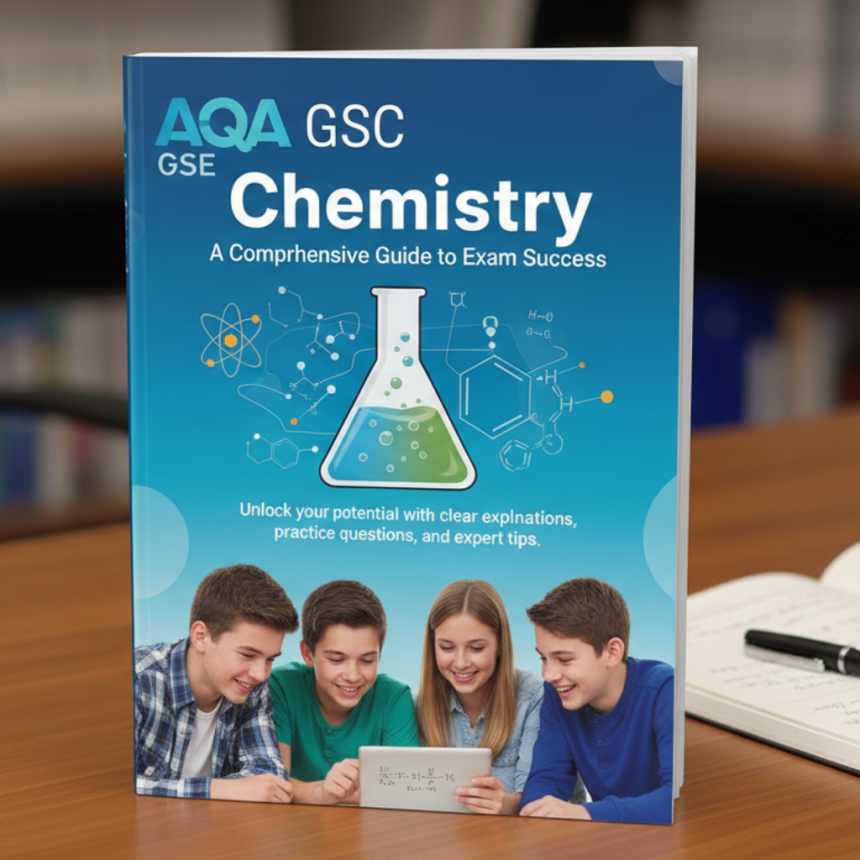

AQA GCSE Chemistry: A Comprehensive Guide to Exam Success
Explore our AQA GCSE Chemistry guide for effective study tips, key topics, and exam strategies to boost your grade. Learn concepts and key exam techniques
The AQA GCSE Chemistry course serves as a basic requirement for students who want to study science subjects at an advanced level. Chemistry enables people to comprehend their environment because it explains all substances and the chemical reactions that produce everything essential for existence. The AQA GCSE Chemistry exam guide presents essential concepts and study methods together with practical resources for your exam success.
The Mixt Academy guide aims to equip you with essential knowledge and understanding of the subject, while also providing strategies for exam preparation. The AQA GCSE Chemistry tutoring provides useful information for students who need help with their studies and exam preparation.
Key Topics in AQA GCSE Chemistry
- Atomic Structure and the Periodic Table: The basic structure of atoms and their compound formation process, element classification system, and periodic table property trends will be taught to students.
- Bonding and Structure: Students will learn about three chemical bond types, which include ionic bonds, covalent bonds and metallic bonds while discovering point How material structure determines its boiling point and melting point characteristics.
- Quantitative Chemistry: Students will learn how to perform molar calculations and balance equations, and use formulas for reactant and product calculations.
- Chemical Changes: Students will examine oxidation, reduction and neutralisation reactions while discovering energy transformations that occur during chemical processes.
- Energy Changes in Reactions: Students will study chemical reaction energy mechanisms while learning to calculate energy transformations through enthalpy measurement.
- Rates of Reaction: The study will investigate how various factors influence chemical reaction speed while providing methods for measuring reaction velocity.
- Organic Chemistry: Students will learn about the structural characteristics and chemical properties of hydrocarbons, alcohols, and acids, along with their corresponding chemical reactions.
- Chemical Analysis: Students will learn to use different methods for substance identification and composition analysis.
- The Atmosphere and Climate Change: The research will investigate atmospheric composition, greenhouse effect mechanisms and human activities that contribute to climate change.
- Using Resources: The study investigates how we use natural resources and implement recycling and sustainable chemistry methods to address environmental challenges.
6 Tips for Success in AQA GCSE Chemistry
In order to do well in AQA GCSE Chemistry, you need more than just basic knowledge. Here are a few proven tips to help you perform better in your exams:
1.Understand Core Concepts
Understanding the core principles behind chemical reactions, atomic structure, and the periodic table is key to tackling both theoretical and practical exam questions.
2.Practice Past Papers
One of the best ways to prepare for your GCSE Chemistry exam is to practice with past papers. This will familiarise you with the types of questions you might face and help you time your responses effectively.
3.Use Visual Aids
Use diagrams, mind maps, and flow charts to break down complex topics like bonding, structure, and chemical reactions. Visual aids make it easier to retain and understand the material.
4.Break Down Difficult Topics
Some topics may seem challenging, but breaking them down into smaller, more manageable sections will help you understand them better. For instance, when studying reaction rates, focus on one factor at a time (temperature, concentration, surface area).
5.Active Revision
Rather than passively reading your notes, engage with the material actively. This could mean summarising notes, teaching concepts to others, or answering practice questions aloud.
6.Stay Consistent
Consistent study is key to mastering chemistry. It’s better to study a little bit each day rather than cramming at the last minute. Create a timetable that includes short, focused study sessions.
The Importance of AQA GCSE Chemistry Practicals
One crucial part of AQA GCSE Chemistry is practical experiments. These experiments test your ability to apply the theoretical knowledge you’ve learned in the classroom. Here's a breakdown of practical areas covered:
- Practical Experimentation: Students must demonstrate their practical skills in various experiments that cover topics like titration, flame tests, and reaction rates.
- Practical Write-Ups: In addition to conducting experiments, students are expected to produce written reports that describe the procedure, results, and analysis of the experiment.
- Safety and Accuracy: Safety is a top priority during practical experiments. Students need to understand and follow safety protocols, as well as demonstrate accuracy in measurements and observations.
Platforms like Mixt Academy can help reinforce these practical skills through online tutoring, offering guidance on both the execution and reporting of experiments.
Final Thoughts
Success in AQA GCSE Chemistry requires a solid grasp of key concepts, strong practical skills, and focused exam preparation. Regular revision, practising past papers, and making use of various resources such as textbooks, videos, and online quizzes will put you in a great position to excel.
Chemistry is more than just memorisation; it's about truly understanding the principles and applying them to solve problems. Consistent effort is key, and with the right strategy, you'll achieve excellent results.
Additionally, platforms like Mixt Academy provide personalised tutoring to strengthen your understanding and enhance your practical skills. This support ensures you're well-prepared and confident for your exam.
FAQs
What are the key topics in AQA GCSE Chemistry?
The key topics in AQA GCSE Chemistry include atomic structure, bonding, quantitative chemistry, chemical changes, energy changes, reaction rates, organic chemistry, chemical analysis, and the atmosphere. Mastering these topics will help you tackle a range of exam questions.
How can I improve my practical skills for GCSE Chemistry?
To improve your practical skills, practice as much as possible in the lab. Pay attention to detail, follow safety procedures, and ensure you can accurately measure substances. Reviewing your practical write-ups and focusing on the method, results, and analysis will help enhance your skills.
What is the best way to revise for GCSE Chemistry?
The best way to revise for GCSE Chemistry is through consistent study, practising past papers, and engaging with the material actively. Use visual aids like diagrams and mind maps to understand concepts better, and try to explain topics in your own words to reinforce your learning.
How do I manage my time during the Chemistry exam?
Time management during your GCSE Chemistry exam is crucial. Allocate enough time for each question, and make sure to read the questions carefully before answering. Don’t spend too long on any one question, and ensure you leave time to review your answers.


What Is Chakra Healing? Benefits, Techniques, and What to Expect
What Is Chakra Healing? Benefits, Techniques, and What to Expect


Why Custom Shipping Boxes Are Essential for Safe and Efficient Deliver...