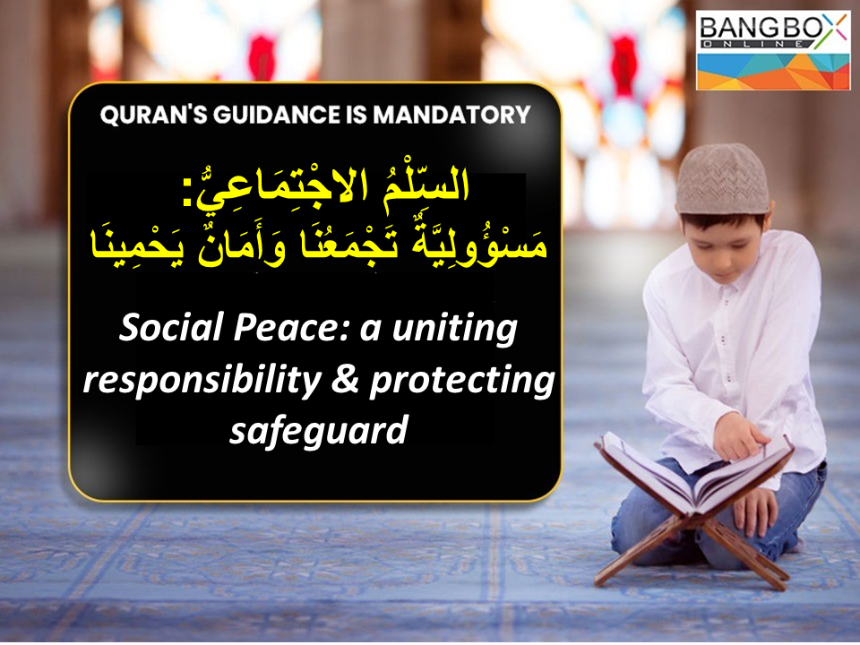

السِّلْمُ الاجْتِمَاعِيُّ: مَسْؤُولِيَّةٌ تَجْمَعُنَا وَأَمَانٌ يَحْمِينَا : Social Peace: a uniting responsibility & a protecting safeguard
Al Quran is the final Holy Book revealed upon the Last of Prophets Hazrat Muhammad (PBUH). The Quran & Sunnah is the only source of holy guidance as it entails detailed instructions for each and every walk of human life. Here guidance from Quran for the followers of Islam (السِّلْمُ الاجْتِمَاعِيُّ: مَسْؤُولِيَّةٌ تَجْمَعُنَا وَأَمَانٌ يَحْمِينَا : Social Peace: a uniting responsibility & a protecting safeguard) is discussed wrt the social justice is key responsibility for peace, unity and safety in the society for better living from Quran and Hadith of Prophet ﷺ. This is an approved Jumma Khutba from the Sultanate of Oman and translated in English.
أَعُوذُ بِاللّٰهِ مِنَ الشَّيْطَانِ الرَّجِيمِ
بِسۡمِ ٱللهِ ٱلرَّحۡمَـٰنِ ٱلرَّحِيمِ
In the name of ALLAH, the Most Gracious, the Most Merciful
السِّلْمُ الاجْتِمَاعِيُّ... مَسْؤُولِيَّةٌ تَجْمَعُنَا وَأَمَانٌ يَحْمِينَا
Social peace... a responsibility that unites us and a safeguard that protects us.
Praise be to Allah, who created mankind into nations and tribes so that they might come to know one another, and who commanded reconciliation among the believers so that they might live in harmony. I bear witness that there is no god but Allah alone, having no partner, and I bear witness that Muhammad, peace be upon him, is His servant and Messenger—through whom Allah brought hearts together and united the people. May the peace and blessings of Allah be upon him, his family, all his companions, and those who follow them in righteousness until the Day of Judgment. This is the translation of the recited verse from Surah Al Hujraat:
أَمَّا بَعْدُ، فاعوذ باللہ من الشیطان الرجیم- بسم اللہ الرحمن الرحیم
اِنَّمَا الۡمُؤۡمِنُوۡنَ اِخۡوَةٌ فَاَصۡلِحُوۡا بَيۡنَ اَخَوَيۡكُمۡ ۚوَاتَّقُوا اللّٰهَ لَعَلَّكُمۡ تُرۡحَمُوۡنَ ﴿۱۰﴾ يٰۤاَيُّهَا الَّذِيۡنَ اٰمَنُوۡا لَا يَسۡخَرۡ قَوۡمٌ مِّنۡ قَوۡمٍ عَسٰٓى اَنۡ يَّكُوۡنُوۡا خَيۡرًا مِّنۡهُمۡ وَلَا نِسَآءٌ مِّنۡ نِّسَآءٍ عَسٰٓى اَنۡ يَّكُنَّ خَيۡرًا مِّنۡهُنَّۚ وَلَا تَلۡمِزُوۡۤا اَنۡفُسَكُمۡ وَلَا تَنَابَزُوۡا بِالۡاَلۡقَابِؕ بِئۡسَ الِاسۡمُ الۡفُسُوۡقُ بَعۡدَ الۡاِيۡمَانِ ۚ وَمَنۡ لَّمۡ يَتُبۡ فَاُولٰٓٮِٕكَ هُمُ الظّٰلِمُوۡنَ ﴿۱۱﴾ يٰۤـاَيُّهَا الَّذِيۡنَ اٰمَنُوا اجۡتَنِبُوۡا كَثِيۡرًا مِّنَ الظَّنِّ اِنَّ بَعۡضَ الظَّنِّ اِثۡمٌ وَّلَا تَجَسَّسُوۡا وَلَا يَغۡتَبْ بَّعۡضُكُمۡ بَعۡضًا ؕ اَ يُحِبُّ اَحَدُكُمۡ اَنۡ يَّاۡكُلَ لَحۡمَ اَخِيۡهِ مَيۡتًا فَكَرِهۡتُمُوۡهُ ؕ وَاتَّقُوا اللّٰهَ ؕ اِنَّ اللّٰهَ تَوَّابٌ رَّحِيۡمٌ ﴿۱۲﴾ يٰۤاَيُّهَا النَّاسُ اِنَّا خَلَقۡنٰكُمۡ مِّنۡ ذَكَرٍ وَّاُنۡثٰى وَجَعَلۡنٰكُمۡ شُعُوۡبًا وَّقَبَآٮِٕلَ لِتَعَارَفُوۡا ؕ اِنَّ اَكۡرَمَكُمۡ عِنۡدَ اللّٰهِ اَ تۡقٰٮكُمۡ ؕ اِنَّ اللّٰهَ عَلِيۡمٌ خَبِيۡـرٌ ﴿۱۳﴾
The believers are nothing else than brothers (in Islâmic religion). So make reconciliation between your brothers, and fear Allâh, that you may receive mercy. (10) O you who believe! Let not a group scoff at another group, it may be that the latter are better than the former; Nor let (some) women scoff at other women, it may be that the latter are better than the former, Nor defame one another, nor insult one another by nicknames. How bad is it, to insult one's brother after having Faith [i.e. to call your Muslim brother (a faithful believer) as: "O sinner", or "O wicked"]. And whosoever does not repent, then such are indeed Zâlimûn (wrong-doers). (11) O you who believe! Avoid much suspicion, indeed some suspicions are sins. And spy not, neither backbite one another. Would one of you like to eat the flesh of his dead brother? You would hate it (so hate backbiting)[] . And fear Allâh. Verily, Allâh is the One Who forgives and accepts repentance, Most Merciful. (12) O mankind! We have created you from a male and a female, and made you into nations and tribes, that you may know one another. Verily, the most honourable of you with Allâh is that (believer) who has At-Taqwa [i.e. he is one of the Muttaqûn (pious - see V.2:2). Verily, Allâh is All-Knowing, All-Aware. (13)
Surah Al Hujraat – 10-13
O servants of ALLAH: Fear ALLAH and Adopt piety and obey ALLAH, mend your relationships with one another, and safeguard the harmony and security of your society. For unity—a consensus of purpose—is among the greatest of Allah’s blessings upon His servants. Know that social peace is the sheltering canopy under which the members of a society may dwell in safety—secure in their persons, their property, their honor, and their families. It is a profound blessing through which human life is set upon a sound course; under its shelter, acts of worship are performed in tranquility, rights are upheld, families remain stable, and energies are directed toward knowledge, productive work, and construction. When a sense of security takes root in people’s hearts, they turn their attention to the pursuits that serve both their religious and worldly interests; their efforts then yield benefits that redound to the individual and society alike. Conversely, when peace is disrupted, energies are squandered on hostility, societies are depleted by conflict, and the strength that ought to have been directed toward construction and development is lost. Furthermore, Islam established the foundations of this peace from the moment the Prophet (peace and blessings be upon him) founded the Muslim community in Medina. He established bonds of brotherhood between the Emigrants (Muhajirun) and the Helpers (Ansar), united their hearts, and organized the relationship between the Muslims and the various other components of society, ensuring that their lives would be built upon harmony, the preservation of rights, and the upholding of covenants. ALLAH has commanded unity and the rejection of division, stating in Surah Aal E Imran:
وَاعۡتَصِمُوۡا بِحَبۡلِ اللّٰهِ جَمِيۡعًا وَّلَا تَفَرَّقُوۡا وَاذۡكُرُوۡا نِعۡمَتَ اللّٰهِ عَلَيۡكُمۡ اِذۡ كُنۡتُمۡ اَعۡدَآءً فَاَ لَّفَ بَيۡنَ قُلُوۡبِكُمۡ فَاَصۡبَحۡتُمۡ بِنِعۡمَتِهٖۤ اِخۡوَانًا
And hold fast, all of you together, to the Rope of Allâh (i.e. this Qur'ân), and be not divided among yourselves[], and remember Allâh's Favour on you, for you were enemies one to another but He joined your hearts together, so that, by His Grace, you became brethren (in Islâmic Faith),
Surah Aal E Imran – 103-Part
The Prophet (peace and blessings of Allah be upon him) encapsulated a significant aspect of peace by defining the perfection of a person’s Islam through the safety of others from any harm; he stated: "A Muslim is one from whose tongue and hand other Muslims are safe."
O Muslims: Given the high status of social peace, preserving it is a responsibility that manifests in both words and actions—beginning with an individual’s conduct in their interactions with those around them. One of the simplest ways to foster harmony and establish peace among people is the spreading of the salam (the Islamic greeting of peace). The Prophet (peace and blessings of Allah be upon him) identified the salam as a pathway to mutual love, stating: "You shall not enter Paradise until you believe, and you shall not [truly] believe until you love one another. Shall I not guide you to something that, if you do it, will lead you to love one another? Spread the salam among yourselves."
Among the causes of peace and harmony—O servants of Allah—is the kind word. The Prophet (peace and blessings of Allah be upon him) even classified it as an act of charity, stating: "And a kind word is charity." He also warned against the harm caused by the tongue, saying: "A true believer is not one who frequently slanders, curses, uses obscene language, or speaks in a vulgar manner." In our time, the scope of the "spoken or written word" has expanded significantly; it may now take the form of a written message, a published comment, or a piece of news circulated among people. Every Muslim, therefore, should be mindful of God regarding what they say, write, or relay. One must be cautious of any word that could harm an individual, ignite a conflict, or stir up hatred among members of society. Among the most dangerous of such actions is the spreading of rumors or news without verification—for God Almighty has commanded us to seek clarity, stating in Surah Al Hujraat:
يٰۤاَيُّهَا الَّذِيۡنَ اٰمَنُوۡۤا اِنۡ جَآءَكُمۡ فَاسِقٌ ۢ بِنَبَاٍ فَتَبَيَّنُوۡۤا اَنۡ تُصِيۡبُوۡا قَوۡمًا ۢ بِجَهَالَةٍ فَتُصۡبِحُوۡا عَلٰى مَا فَعَلۡتُمۡ نٰدِمِيۡنَ
O you who believe! If a Fasiq (liar — evil person) comes to you with any news, verify it, lest you should harm people in ignorance, and afterwards you become regretful for what you have done.
Surah Al Hujraat – 06
A word carries responsibility, and its impact on society may extend far beyond what the speaker imagines.
Among the pillars of social peace—O Muslims—is the cooperation of society’s members toward that which unites them and brings about goodness among them; for Allah the Almighty has commanded this, saying in Surah Al Maedah:
وَتَعَاوَنُوۡا عَلَى الۡبِرِّ وَالتَّقۡوٰى وَلَا تَعَاوَنُوۡا عَلَى الۡاِثۡمِ وَالۡعُدۡوَانِ
Help you one another in Al-Birr and At-Taqwa (virtue, righteousness and piety); but do not help one another in sin and transgression.
Surah Al Maeda – 02-Part
Cooperation in righteousness encompasses a wide range of fields, manifesting itself in compassion, mutual support, fulfilling needs, and participating in what benefits society. Through it, bonds are strengthened, efforts are combined, and individuals feel their responsibility towards those around them. Part of this is upholding rights and establishing justice. For souls find peace when they know that their rights are protected, that injustice finds no way to prevail, and that the aggressor is not left to his transgression. And ALLAH has made justice a fundamental principle in the lives of people, as He, Glory be to Him, says in Surah Al Nahl:
اِنَّ اللّٰهَ يَاۡمُرُ بِالۡعَدۡلِ وَالۡاِحۡسَانِ وَاِيۡتَآىِٕ ذِى الۡقُرۡبٰى وَيَنۡهٰى عَنِ الۡفَحۡشَآءِ وَالۡمُنۡكَرِ وَالۡبَغۡىِۚ
Verily, Allâh enjoins Al-Adl (i.e. justice and worshipping none but Allâh Alone - Islâmic Monotheism) and Al-Ihsân [i.e. to be patient in performing your duties to Allâh, totally for Allâh's sake and in accordance with the Sunnah (legal ways) of the Prophet SAW in a perfect manner], and giving (help) to kith and kin[] (i.e. all that Allâh has ordered you to give them e.g., wealth, visiting, looking after them, or any other kind of help): and forbids Al-Fahshâ' (i.e all evil deeds, e.g. illegal sexual acts, disobedience of parents, polytheism, to tell lies, to give false witness, to kill a life without right), and Al-Munkar (i.e all that is prohibited by Islâmic law: polytheism of every kind, disbelief and every kind of evil deeds), and Al-Baghy (i.e. all kinds of oppression),
Surah Al Nahl – 90-Part
Fear ALLAH, O servants of ALLAH, and safeguard the well-being of your society against anything that might disturb the serenity of its peace and security, or fracture the foundations of its cohesion and harmony.
أقولُ مَا تَسْمَعُونَ، وَأَسْتَغْفِرُ اللهَ العَظِيمَ لِي وَلَكُمْ، فَاسْتَغْفِرُوهُ يَغْفِرْ لَكُمْ، إِنَّهُ هُوَ الغَفُورُالرَّحِيمُ، وَادْعُوهُ يَسْتَجِبْ لَكُمْ، إِنَّهُ هُوَ البَرُّ الكَرِيمُ
I say what you hear, and I ask forgiveness from ALLAH Almighty for me and for you, so ask forgiveness from Him and He will forgive you, for He is the Forgiving and Merciful, and pray to Him and He will answer you, for He is The noble righteousness...
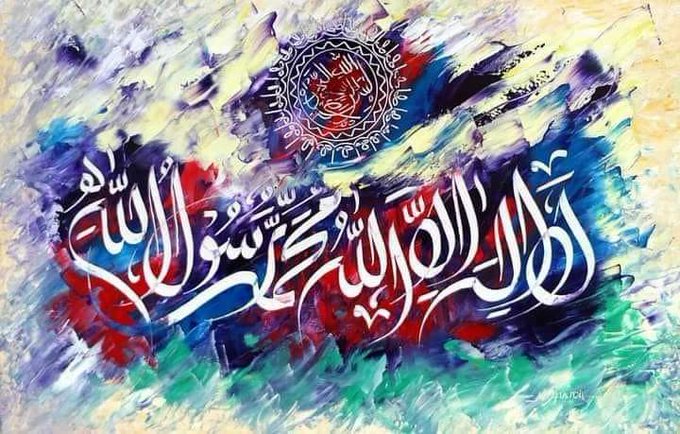
الْحَمْدُ لِلَّهِ الَّذِي أَلَّفَ بَيْنَ الْمُؤْمِنِينَ فَأَصْبَحُوا بِنِعْمَتِهِ إِخْوَانًا، وَجَعَلَ السِّلْمَ وَالسَّلَامَ لِمُجْتَمَعِهِمْ أَسَاسًا وَعُنْوَانًا، وَأَشْهَدُ أَنْ لَا إِلَهَ إِلَّا اللَّهُ وَحْدَهُ لَا شَرِيكَ لَهُ، وَأَشْهَدُ أَنَّ مُحَمَّدًا عَبْدُهُ وَرَسُولُهُ، ﷺ وَعَلَى آلِهِ وَصَحْبِهِ أَجْمَعِينَ، وَمَنْ تَبِعَهُمْ بِإِحْسَانٍ إِلَى يَوْمِ الدِّينِ
Praise be to Allah, who brought the hearts of the believers together, so that by His grace they became brothers; He established peace and harmony as the foundation and hallmark of their society. I bear witness that there is no god but Allah alone, having no partner, and I bear witness that Muhammad is His servant and messenger—may the peace and blessings of Allah be upon him, his family, all his companions, and those who follow them in righteousness until the Day of Judgment.
O servants of Allah: One of the greatest means of preserving the peace and harmony of society is the reconciliation of those in conflict—a matter that Allah has commanded, for He says in Surah Al Hujraat:
اِنَّمَا الۡمُؤۡمِنُوۡنَ اِخۡوَةٌ فَاَصۡلِحُوۡا بَيۡنَ اَخَوَيۡكُمۡ
The believers are nothing else than brothers (in Islâmic religion). So make reconciliation between your brothers,
Surah Al Hujraat – 10-Part
The Messenger of Allah (ﷺ) said: "Shall I not inform you of something that holds a higher status than fasting, prayer, and charity?" They replied, "Yes, please do." He said, "Reconciling differences between people; for the corruption of relationships is the 'shaaliqah' [that which shaves away/destroys one's religion]." Therefore, a Muslim should strive to facilitate reconciliation. When witnessing a dispute, he should seek to bring hearts closer together; when hearing words that fuel conflict, he should extinguish them; and if he is able to reunite two people who have become estranged, he should ensure that Satan finds no opening to come between them. A peacemaker does not add fuel to the fire; rather, he brings the water of wisdom and mercy to people's hearts. Another means of achieving social peace is tolerance and the act of forgiving when one has the power to retaliate. This serves as a bridge upon which a society may cross toward stability; overlooking minor slights, as well as personal or familial grudges, is a religious requirement for protecting society and preserving its well-being and security. ALLAH Almighty has called for this, stating in Surah Al Noor:
وَلۡيَـعۡفُوۡا وَلۡيَـصۡفَحُوۡا ؕ اَلَا تُحِبُّوۡنَ اَنۡ يَّغۡفِرَ اللّٰهُ لَـكُمۡ
Let them pardon and forgive. Do you not love that Allâh should forgive you?
Surah Al Noor – 22-Part
Furthermore, protecting the social fabric is a shared responsibility that rests upon everyone: the father in his home, the teacher in the classroom, the media professional in their work, and every citizen within their own sphere. Each of them has a role to play in consolidating social peace, promoting it, and warning against anything that might incite hatred, resentment, or odious intolerance.
Fear Allah, O servants of Allah, and know that our homelands and societies are a trust placed upon our shoulders. Preserving their security, stability, and social harmony is both a religious and a national duty—one that must never be neglected under any circumstances. It is therefore incumbent upon us to stand as one, forming an impenetrable barrier against anything that threatens our unity or disrupts our social cohesion.
O servants of ALLAH, in the end a kind reminder of this command of ALLAH from Surah Az Zumr:
قُلۡ يَـٰعِبَادِىَ ٱلَّذِينَ أَسۡرَفُواْ عَلَىٰٓ أَنفُسِهِمۡ لَا تَقۡنَطُواْ مِن رَّحۡمَةِ ٱللَّهِۚ إِنَّ ٱللَّهَ يَغۡفِرُ ٱلذُّنُوبَ جَمِيعًاۚ إِنَّهُ ۥ هُوَ ٱلۡغَفُورُ ٱلرَّحِيمُ
Say: "O 'Ibâdî (My slaves) who have transgressed against themselves (by committing evil deeds and sins)! Despair not of the Mercy of Allâh, verily Allâh forgives all sins. Truly, He is Oft-Forgiving, Most Merciful.
Surah Az Zumr – 53

PP Sheets for Lightweight Construction and Creative Design Projects



Luxury Flower Delivery in Delhi NCR | Fresh Artisan Blooms
Discover the art of luxury floral gifting with expert tips on maintaining an unbroken cold...


Primavera P6 Interview Questions and Answers for Freshers and Experien...

ICSI vs IVF Difference: Understanding Fertility Treatment
ICSI vs IVF Difference: Understanding Fertility Treatment Many couples exploring fertil...
