
All-on-4 Dental Implants: A Complete Guide for Patients Considering Full-Arch Tooth Replacement
When a person loses several teeth or is faced with an all-on-4 dental implant treatment, it is one of the most important dental changes that can occur in their life.
Introduction
When a person loses several teeth or is faced with an all-on-4 dental implant treatment, it is one of the most important dental changes that can occur in their life.
For many patients, the solution to restoring their smile to a comfortable, natural and permanent appearance has traditionally been removable dentures, continual instability, and struggling to chew, speak and feel confident with a partial or full denture.
All-on-4 dental implants have turned this landscape upside down. With the All-on-4 treatment, the full arch of fixed permanent replacement teeth is supported by four strategically placed dental implants.
This treatment leaves the smile on the patient's face, and the bite is like natural teeth, with no need to wear any removable appliance.
The innovative All-on-4 concept is based on a biomedicine finding: that four specially placed implants can deliver enough anchorage and load distribution for a full arch of teeth. This is in contrast with the traditional implant treatments, where the replacement of a full arch may need 6 to 8 or more individual implants.
The defining feature of All-on-4 is the angulation of the two posterior implants in each arch. While the two front implants are placed vertically, the two rear implants are positioned at an angle of up to 45 degrees. This angulation serves several important purposes:
- It maximises contact with available bone in the posterior jaw
- It avoids critical anatomical structures such as the sinus cavities and inferior alveolar nerve
- It distributes bite forces more effectively across the arch
- It frequently eliminates the need for bone grafting procedures
The two posterior implants in each arch are angled in All-on-4. The two back implants are angled up to 45 degrees, whereas the two front implants are vertical. This is an important angulation for several reasons.
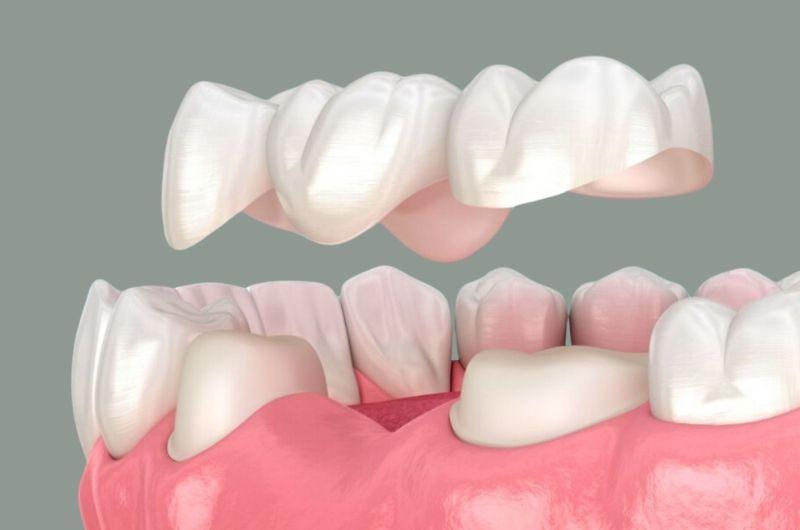
The implants themselves serve as anchors for a full-arch prosthesis, a custom-fabricated bridge that replaces all visible teeth in that jaw. During the healing phase, a temporary prosthesis is attached on the same day as implant placement, allowing patients to function and smile immediately.
Once osseointegration, the biological fusion between the implant and bone, is complete, the temporary prosthesis is replaced with the final, definitive restoration.
All-on-4 dental implants suit a broad range of patients, though a thorough clinical evaluation remains essential to confirm suitability and plan treatment effectively.
The Dental clinics in Turkey conduct comprehensive assessments that include imaging, bone density evaluation, and review of overall health status.
Patients who typically qualify for All-on-4 treatment include:
- Adults with most or all teeth missing in one or both arches
- Patients with teeth that are beyond effective restoration and require extraction
- Individuals currently wearing complete or partial removable dentures and seeking a fixed alternative
- Patients with sufficient bone density in the anterior jaw region
- Non-smokers or patients committed to stopping smoking prior to treatment
- Adults in good general health without uncontrolled systemic conditions
The treatment process starts with a thorough consultation, which includes digital X-rays and a 3D cone beam CT scan. These imaging techniques deliver an accurate three-dimensional representation of the jaw, which allows the clinical team to evaluate the amount of bone available, determine the presence of anatomical structures and plan for the accurate placement of implants.
Medical history, current medications and aesthetic and functional goals are also discussed during the consultation.
The team takes advantage of state-of-the-art digital planning software to determine the exact position, depth, and angle of placement for each implant. The design of the prosthesis is also determined at this time to obtain the best possible function and the most aesthetic result desired by the patient.
The patient is given a full explanation of the plan and is given the chance to ask questions before undertaking it.
The surgery is performed under local anaesthetic and can be performed with sedation if the patient wishes to be extra comfortable.
The four implants are then positioned in the pre-planned locations, and the remaining teeth that need to be taken out are extracted.
The implants undergo osseointegration in the next 3-6 months, fusing the implant with the existing jawbone tissue.
At this time, the temporary prosthesis is present, and patients are advised on their diet to protect the healing implants, favouring soft foods. Patients are seen regularly to check the healing process.
Clinical and radiologic evaluation of osseointegration presents confirmation, and the final, custom-fabricated prosthesis is then attached.
It is a permanent restoration fabricated with the highest standards of aesthetics, strength and fit that delivers a long-term restoration that can be relied upon with confidence.
All-on-4 treatment delivers a comprehensive range of benefits that extend across function, aesthetics, oral health, and overall quality of life.
- Restoration of full chewing capacity, enabling patients to eat a wide variety of foods
- Improved speech clarity compared to removable dentures, which can shift during speaking
- Stable, fixed restoration that does not move, shift, or require adhesives
- Preservation of jawbone volume through the stimulating effect of implants on bone tissue
- Natural-appearing teeth that complement facial structure and restore smile confidence
- Full-arch restoration that achieves a balanced and harmonious aesthetic across the smile
- Improved facial profile, as bone preservation maintains the natural fullness of the jaw
- Elimination of the daily routines associated with removable dentures
- Restored confidence in social and professional settings
- Long-term stability that supports an active and unrestricted lifestyle
In a world of consistency and diligence, all-on-4 restorations can support you achieve the best long-term results. The prosthesis itself unable to decay; the integrity of the implant/bone interface and the health of the gum tissue around the prosthesis are dependent on excellent hygiene and regular professional monitoring.
- Brush the prosthesis and gumline twice daily using a soft-bristled brush and non-abrasive toothpaste
- Use an interdental brush or water flosser to clean beneath and around the prosthesis where standard floss cannot reach
- Rinse with an antibacterial mouthwash as directed by the clinical team
- Monitor for any changes in fit, comfort, or unusual sensations and report these promptly
Regular professional care forms an essential component of long-term All-on-4 success:
- Biannual hygiene appointments for professional cleaning of the prosthesis and implant sites
- Annual clinical and radiographic examination to assess implant integration and bone levels
- Prosthesis check and adjustment as needed to maintain optimal fit and bite balance
Patients who maintain consistent hygiene and attend scheduled follow-up appointments achieve the best long-term outcomes and maximise the lifespan of their All-on-4 restoration.
All-on-4 dental implants carry strong long-term clinical evidence supporting their reliability and durability. Implant survival rates and patient satisfaction outcomes at 10+ years follow a consistent trend of high survival rates and patient satisfaction.
Key long-term outcome indicators include:
- Implant survival rates consistently above 95% at 10 years in well-maintained patients
- Preservation of jawbone volume due to the stimulating effect of osseointegrated implants
- Stable prosthetic function and aesthetics over time with proper maintenance
- High patient-reported satisfaction scores relating to comfort, function, and aesthetics
The entire All on 4 treatment procedure—from the time the implants are placed until the permanent prosthesis is delivered takes anywhere from 3 to 6 months. The surgical appointment takes about 1 – 2 days, during which the implants are surgically inserted and a temporary prosthesis is fitted.
Surgical procedure is performed under local anaesthetic, so the patient will not feel any pain during the surgery. There is expected to be some discomfort, swelling and sensitivity in the first few days after surgery, which you can control with medication delivered by the surgeon.
The All-on-4 protocol is optimised to treat available bone, and the tilted posterior implants can frequently enable treatment without using bone grafting, even in cases of bone loss. Patients with more severe bone resorption are comprehensively evaluated to see which method is most likely to yield the best results: the standard All-on-4, an All-on-6 or preliminary bone augmentation.


Effective Cleaning Bins Solutions: Improve Hygiene with Expert Waste B...





What Is Cenforce? A Complete UK Patient Guide
Learn what Blue Zopiclone is, how it works, recommended UK dosage, safety advice, possible...