Accelerating Product Development with Industrial Prototypes and Hybrid Manufacturing
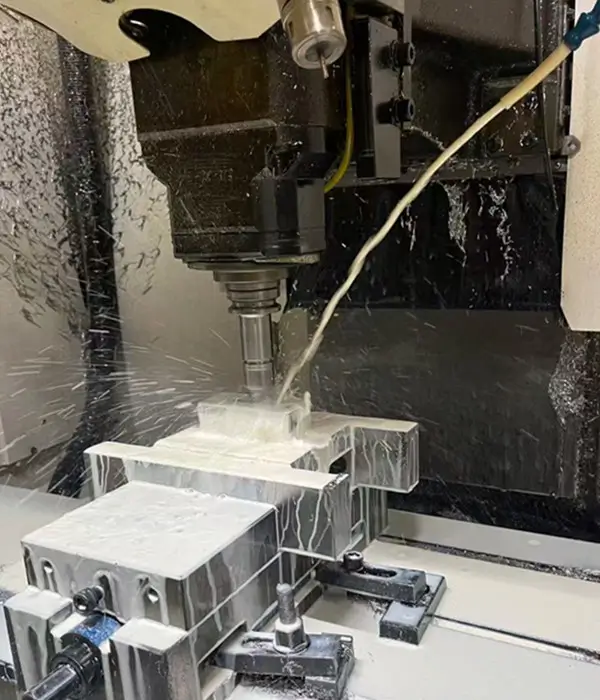
In today’s competitive manufacturing landscape, speed, accuracy, and flexibility determine how quickly an idea turns into a market-ready product. Companies across automotive, medical, electronics, and industrial equipment sectors rely heavily on industrial prototypes to validate designs, test functionality, and reduce production risks. As manufacturing technologies evolve, one approach is standing out for its efficiency and precision: 3D printing and CNC machining combined services. This hybrid method is redefining how modern prototypes are developed and refined.
Why Industrial Prototypes Matter in Modern ManufacturingIndustrial prototypes are no longer simple visual models. They are functional, high-precision components that replicate real-world performance. Engineers use them to identify design flaws, test materials, and verify assembly before committing to mass production.
A well-made prototype helps businesses:
- Reduce costly design errors early
- Speed up product development cycles
- Improve communication between engineering and production teams
- Validate performance under real operating conditions
Without reliable industrial prototypes, manufacturers risk delays, budget overruns, and product failures after launch.
The Evolution Toward Hybrid Manufacturing SolutionsTraditional manufacturing relied heavily on subtractive processes like CNC machining. While extremely precise, CNC alone can be time-consuming and less flexible during early design stages. On the other hand, additive manufacturing, commonly known as 3D printing, excels at rapid iteration and complex geometries but may lack the surface finish or tolerance required for certain applications.
This is where 3D printing and CNC machining combined services come into play. By integrating both technologies into a single workflow, manufacturers can leverage the strengths of each method while minimizing their limitations.
How 3D Printing and CNC Machining Combined Services WorkWith 3D printing and CNC machining combined services, the prototyping process becomes more efficient and adaptable. Typically, the workflow follows these steps:
· Initial Prototype via 3D PrintingEarly design concepts are produced quickly using 3D printing. This allows teams to test form, fit, and basic function within days instead of weeks.
· Design RefinementFeedback from testing is incorporated into the design. Multiple iterations can be produced rapidly without expensive tooling.
· Precision Finishing with CNC MachiningOnce the design is validated, CNC machining is used to refine critical features, achieve tight tolerances, and improve surface quality.
This hybrid approach ensures that industrial prototypes are both fast to produce and precise enough for real-world testing.
Benefits of Industrial Prototypes Made with Hybrid ManufacturingUsing industrial prototypes developed through hybrid manufacturing offers several key advantages:
· Faster Time to Market: Rapid iterations reduce development cycles significantly.
· Higher Accuracy: CNC machining ensures critical dimensions and tolerances are met.
· Design Freedom: 3D printing allows complex internal structures that would be difficult or impossible to machine alone.
· Cost Efficiency: Combining processes reduces material waste and avoids unnecessary rework.
For industries where performance and reliability are non-negotiable, this balance is essential.
Applications Across Multiple IndustriesThe demand for industrial prototypes created through 3D printing and CNC machining combined services continues to grow across sectors:
- Automotive: Functional parts, housings, and fixtures for testing and validation
- Medical Devices: High-precision components requiring strict tolerances and smooth finishes
- Electronics: Enclosures, connectors, and thermal management parts
- Industrial Equipment: Custom components and mechanical assemblies
Each of these industries benefits from the speed of additive manufacturing combined with the precision of CNC machining.
Choosing the Right Partner for Industrial PrototypingNot all prototyping providers offer true hybrid capabilities. When selecting a manufacturing partner, it is important to look for experience in both technologies and the ability to integrate them seamlessly.
A reliable provider of 3D printing and CNC machining combined services should offer:
- A wide range of materials, including plastics and metals
- Advanced CNC equipment for high-tolerance machining
- Engineering support to optimize designs for manufacturability
- Consistent quality control throughout the process
These factors ensure that industrial prototypes accurately represent final production parts.
From Prototype to Production with ConfidenceOne of the biggest advantages of high-quality industrial prototypes is the smooth transition to low-volume or mass production. Designs validated through hybrid prototyping are less likely to encounter issues during manufacturing, saving both time and cost.
By using 3D printing and CNC machining combined services, manufacturers can bridge the gap between concept and production with confidence, knowing that their designs have been thoroughly tested and refined.
Final ThoughtsAs product development cycles become shorter and competition increases, manufacturers need smarter prototyping strategies. Industrial prototypes produced through 3D printing and CNC machining combined services offer the ideal balance of speed, precision, and flexibility. This hybrid approach is no longer a future trend—it is a proven solution for companies that demand accuracy and efficiency in modern manufacturing.
For businesses looking to stay ahead, embracing hybrid manufacturing is a strategic step toward better products and faster innovation.