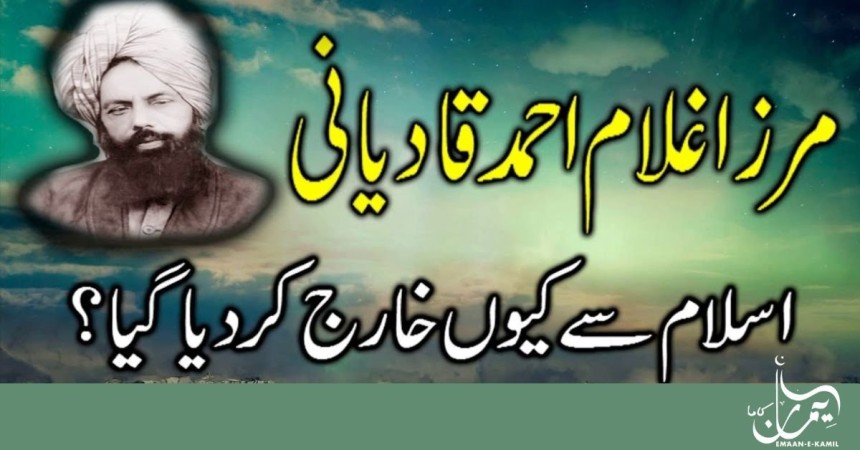

From Indonesia to Morocco, from Pakistan to the Middle East, Muslims worldwide share a unified stance on the claims of Mirza Ghulam Ahmad Qadiani. This unity stems from theology, not hostility. Understanding the Muslim viewpoint requires reviewing the principles upon which the religion stands.
1. Finality of Prophethood—An Unshakeable Belief
Islam’s message is clear: Prophet Muhammad ﷺ is the last messenger of Allah. This belief is explicitly stated in the Qur’an and reinforced through authentic Hadith. Therefore, any claim to prophethood—regardless of form—contradicts this fundamental doctrine and is automatically rejected.
2. Consensus of the Muslim Ummah Across Time and Geography
After Qadiani announced his claim, Islamic scholars from different regions, sects, and backgrounds unanimously refuted his position. This rare, universal agreement demonstrates how central the belief in finality is to Muslim identity.
3. Ambiguity and Contradictions in His Self-Proclaimed Roles
Mirza Ghulam Ahmad claimed different identities at various times—reformer, Messiah, prophet, Krishna-like figure. These conflicting claims raise theological concerns among Muslims, who believe genuine prophets receive a clear, consistent mission from Allah.
4. Unfulfilled Predictions and Questionable Revelations
Many of Qadiani’s prophecies are historically documented as unfulfilled. In Islam, a single failed prophecy is enough to disqualify anyone claiming divine revelation. Muslims, therefore, see this as further confirmation that his claim lacks legitimacy.
5. Alteration of Established Islamic Beliefs
Qadiani reinterpreted essential doctrines in ways that depart from mainstream Islam, such as:
- the mission and return of Isa (AS)
- the meaning of revelation
- the definition of a prophet
- the boundaries of the Muslim Ummah
These reinterpretations create theological divergence, which Muslims take seriously.
6. Protecting the Purity and Original Message of Islam
Muslims believe Islam was completed and perfected by Allah during the lifetime of Prophet Muhammad ﷺ. Introducing new prophetic claims or doctrinal innovations contradicts the concept of a complete religion. Therefore, Muslims feel a responsibility to preserve Islam as it was revealed.
Conclusion
The Muslim rejection of Mirza Ghulam Ahmad Qadiani is rooted in theology, scripture, and history—not personal hostility. Muslims feel obligated to uphold the honor of Prophet Muhammad ﷺ and protect the authenticity of Islam’s message. The doctrine of finality remains a cornerstone of faith, forming the basis for this unanimous stance.