
7 Powerful Tips for Finding 24-Hour Urgent Care Near You
Looking for 24 hour urgent care near me? Learn which conditions urgent care treats, how to check hours and costs, and when to visit an ER.
Introduction
Medical problems can happen at any time, including late at night, early in the morning, or during weekends and holidays. When you or a family member needs medical attention outside regular office hours, finding 24 hour urgent care near me can help you understand your options and decide where to seek treatment.
Urgent care centers generally treat non-life-threatening illnesses and minor injuries that need prompt attention. Emergency rooms, on the other hand, are designed to evaluate and treat potentially life-threatening conditions and serious medical problems.
Understanding the difference between urgent care and emergency care can help you make a safer decision. This guide explains what 24-hour urgent care means, which conditions it may treat, how to find nearby services, what costs to consider, and when to visit ER of Mesquite for emergency evaluation.
What Is 24-Hour Urgent Care?A 24-hour urgent care center is a medical facility that provides care for non-life-threatening health problems at any time of day or night.
Unlike traditional clinics that may close in the evening, facilities advertising 24-hour services aim to provide access to medical evaluation outside normal business hours. However, not every urgent care center operates around the clock, so it is important to confirm the facility's current hours and available services before visiting.
Depending on the location, urgent care services may include:
- Evaluation of minor illnesses
- Treatment for minor cuts and burns
- Care for mild sprains and strains
- Testing for certain infections
- Treatment of minor skin problems
- Evaluation of mild respiratory symptoms
- Basic diagnostic testing
- Prescription services when medically appropriate
Urgent care is useful when a problem needs attention soon but does not appear to be a medical emergency.
7 Tips for Finding Urgent Care Near YouWhen searching for urgent medical care, consider more than distance alone.
1. Check Whether the Facility Is Open 24 HoursDo not assume that every urgent care center operates all night. Check its official website or call ahead to confirm:
- Current operating hours
- Holiday hours
- Whether walk-ins are accepted
- Availability of a medical provider
- Whether the service you need is offered
This can help prevent unnecessary travel when you need prompt medical attention.
2. Consider Location and Travel TimeA nearby medical facility may be easier to reach, especially when you feel unwell. Consider traffic, road conditions, parking, and transportation options.
If symptoms are severe or potentially life-threatening, contact emergency services rather than spending time comparing facilities.
3. Review Available Medical ServicesNot every urgent care center provides the same services. Some offer X-rays, basic laboratory testing, or rapid infection testing, while others provide only general medical evaluation.
Confirm whether the facility can assess your particular illness or injury.
4. Check Insurance and CostsBefore a non-emergency visit, check whether the facility accepts your insurance and whether additional fees may apply.
You can ask about:
- Copayments
- Self-pay rates
- Diagnostic testing charges
- Prescription costs
- Follow-up visit fees
Costs vary by provider, insurance plan, and services received.
5. Look for Clear Contact InformationA reliable facility should provide clear information about its location, phone number, hours, and available services.
Reading recent patient reviews may also help you understand other patients' experiences, although reviews cannot guarantee the quality of care you will receive.
6. Understand When an ER Is More AppropriateUrgent care is not a substitute for emergency treatment. If symptoms are severe, rapidly worsening, or potentially life-threatening, an emergency department is generally the appropriate choice.
7. Prepare Important Medical InformationFor a non-emergency visit, bring identification, insurance details, a medication list, and information about allergies or existing medical conditions when possible.
Do not delay urgent treatment to gather paperwork.
What Conditions Can 24-Hour Urgent Care Treat?Urgent care may be appropriate for a variety of common health problems that need prompt attention but are not life-threatening.
Health ProblemIs Urgent Care Appropriate?Mild sore throatOftenEarache without severe symptomsOftenMild feverOftenMinor cutsOften, depending on severityMild sprainsOftenMinor skin rashOftenMild urinary symptomsOften, depending on the patientMinor burnsOften, depending on severitySevere chest painEmergency careDifficulty breathingEmergency careSigns of a strokeEmergency careHeavy or uncontrolled bleedingEmergency careThe appropriate setting depends on symptom severity, age, medical history, and available services.
Urgent Care vs. Emergency Room: What's the Difference?Understanding the difference between urgent care and an emergency room can help you choose the right type of medical service.

Urgent Care
Best for non-life-threatening problems that need prompt attention, such as minor injuries, mild infections, and uncomplicated illnesses. Hours and services vary by facility.

Emergency Room (ER)
Designed to evaluate serious illnesses and injuries, including possible heart attacks, strokes, severe breathing problems, major injuries, and other emergencies. Hospital emergency departments generally operate 24 hours a day.
An important difference is the level of care available. Emergency departments can evaluate and stabilize life-threatening conditions and arrange hospital admission when necessary.
When Should You Visit an Emergency Room?Some medical problems require immediate emergency evaluation rather than an urgent care appointment.
Seek emergency care for:
- Severe or persistent chest pain or pressure
- Difficulty breathing
- Sudden facial drooping, arm weakness, or speech difficulty
- Fainting or loss of consciousness
- Severe bleeding
- Serious head injuries
- Severe abdominal pain
- A severe allergic reaction
- Seizures, especially a first seizure or one that does not stop
- Sudden confusion or a significant change in alertness
If you suspect a heart attack or stroke, call your local emergency service immediately. Do not drive yourself if your condition may worsen suddenly.
What Services May Be Available at a 24-Hour Facility?Services differ between urgent care centers and emergency departments.
Medical ExaminationsA healthcare professional may review symptoms, check vital signs, examine the affected area, and recommend treatment.
Laboratory TestingDepending on the facility, testing may include selected blood tests, urine tests, or rapid tests for certain infections.
Imaging ServicesSome centers offer X-rays to evaluate selected injuries. CT scans, ultrasound, MRI, and other imaging services are not available at every urgent care location.
Emergency departments may offer more extensive diagnostic testing based on the patient's condition and the facility's capabilities.
Treatment and PrescriptionsProviders may recommend supportive care, prescribe medication when appropriate, or refer patients for additional evaluation. Serious conditions may require emergency treatment or hospital care.
Always verify which services are available before visiting if your condition is not an emergency.
How Much Does a 24-Hour Urgent Care Visit Cost?The cost of an urgent care visit depends on several factors, including the facility, insurance coverage, the medical problem, and the tests or treatments required.
Possible expenses include:
- Initial examination
- Laboratory tests
- X-rays
- Medication
- Medical supplies
- Follow-up care
Urgent care may cost less than an emergency room visit for comparable non-emergency problems, but the total cost varies. An emergency department may be necessary regardless of cost when symptoms are potentially life-threatening.
For planned, non-emergency care, contact the facility or your insurance provider to understand likely charges.
What to Expect During an Urgent Care VisitAlthough the process varies, most visits follow a few basic steps.
- Check-in: Provide basic personal information and insurance details, if applicable.
- Initial assessment: Staff may record your symptoms and vital signs.
- Medical examination: A healthcare professional evaluates your condition.
- Testing: Additional tests may be recommended when appropriate.
- Treatment plan: You receive treatment instructions, prescriptions when needed, or guidance for follow-up care.
If the provider identifies a potentially serious condition, you may be referred or transferred to an emergency department.
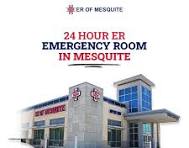
Finding Emergency Care in Mesquite, TexasFor people in Mesquite, Texas, choosing the right medical facility depends on the severity of the symptoms and the services required.
ER of Mesquite is a brand to consider when emergency medical evaluation is needed. If you are experiencing severe symptoms, prioritize immediate medical attention instead of delaying care to compare locations, costs, or wait times.
For less serious illnesses or injuries, confirm that an urgent care center is open and offers the specific service you need. Do not assume that every facility advertising urgent care is open 24 hours.
Frequently Asked Questions1. What does 24-hour urgent care mean?It refers to a medical service that operates around the clock and treats eligible non-life-threatening illnesses and injuries. Always verify the operating hours of a specific location.
2. Is urgent care open at night?Some urgent care centers operate overnight, while others close in the evening. Check the facility's official hours before traveling.
3. Should I go to urgent care or the ER?Urgent care is generally suitable for minor illnesses and injuries. The ER is appropriate for potentially life-threatening conditions, such as severe chest pain, difficulty breathing, or stroke symptoms.
For more blogs visit : https://phat4life.mn.co/posts/powerful-facts-what-does-borderline-ecg-meanInnovations in Cannulated Bone Screw Systems for Percutaneous Fixation
The evolution of minimally invasive orthopedic surgery has driven remarkable advances in c...

Advanced Cortical Bone Screw Technology in Modern Orthopedic Surgery
Orthopedic surgery continues to evolve with innovative fixation technologies that improve...
CrownX.com.pk: Exploring Android Games, Mobile Apps, and Digital Enter...
CrownX.com.pk: Exploring Android Games, Mobile Apps, and Digital Entertainment in Pakistan
