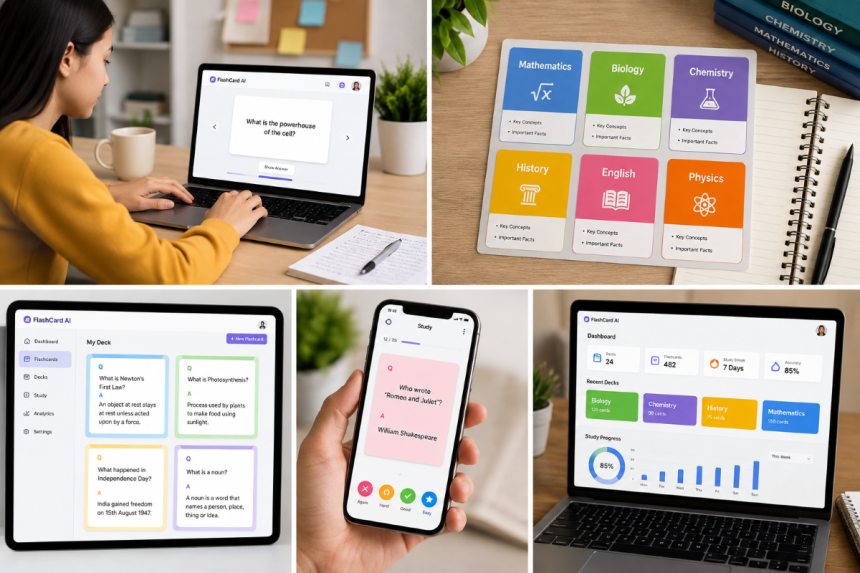

10 Powerful Benefits of Color Flashcards for Smarter Learning
Discover 10 powerful benefits of color flashcards for visual learning, active recall, exam preparation, and organized studying with FlashCard AI.
Introduction
Learning can become more engaging when information is presented in a clear and visual way. Traditional notes often contain large blocks of text, which can make revision feel difficult and repetitive. Color flashcards provide a simple alternative by combining short pieces of information with visual elements that can help learners organize and review important concepts.
Color can be used to separate subjects, highlight key terms, group related information, or make study cards easier to scan. Students can use colored cards for subjects such as science, mathematics, history, languages, and computer science.
Digital tools such as FlashCard AI can also make it easier to create and organize visual study materials. When used with active recall and regular revision, colorful flashcards can become a useful addition to a structured learning routine.
Color flashcards are study cards that use different colors to organize, highlight, or visually distinguish information.
A flashcard can include:
- A question or term
- An answer or definition
- Different colors for categories
- Important words or phrases
- Images or icons
- Examples
- Topic labels
For example, a student studying biology might use one color for definitions, another for processes, and another for important terms.
The colors do not replace the information. Instead, they provide an additional visual structure that can make study materials easier to organize.
Color can make information easier to distinguish at a glance. When learners use a consistent color system, they can quickly identify different categories within a study set.
Colorful flashcards can be useful for:
- Organizing study topics
- Highlighting important information
- Supporting visual learning
- Practicing active recall
- Reviewing vocabulary
- Preparing for exams
- Separating difficult concepts
- Making digital study sets easier to navigate
The most important factor is not the number of colors used but how consistently they are applied.
Large blocks of text can be difficult to scan during revision. Color adds a visual element that can help separate different pieces of information.
For example:
- Blue for definitions
- Green for examples
- Yellow for important terms
- Red for topics that need more practice
A simple system can make a large collection of cards easier to understand.
2. Improve Information OrganizationStudents often study several chapters or subjects at the same time. Using colors can provide another way to organize their flashcards.
For example, a student could use:
Blue: Mathematics
Green: Science
Yellow: History
Purple: Languages
When the same system is used consistently, learners can identify topics quickly without reading every card.
3. Highlight Important InformationSome information deserves more attention than other content. Colors can be used to highlight key words, definitions, formulas, or concepts.
For example, a mathematics flashcard could place an important formula in a contrasting color. A language card could highlight the target vocabulary word.
This can make important details easier to notice during revision.
4. Support Active RecallFlashcards are valuable because they encourage active recall. The learner sees a question, tries to remember the answer, and then checks the result.
Color can add structure without changing this learning process.
For example:
Front: What is the function of the CPU?
Back: The CPU processes instructions and performs calculations.
The card can use a specific color to identify it as a computer science concept.
5. Make Revision More EngagingRepeating the same type of study material can become boring. A well-designed visual flashcard set can make revision more interesting.
Color can create variation while keeping the content simple.
However, learners should avoid using too many colors randomly. A small and consistent color system is usually easier to follow than a card filled with many unrelated colors.
6. Help Create Focused Study SetsStudents can use colors to divide large topics into smaller groups.
For example, a history study set might contain:
- Blue cards for important people
- Green cards for major events
- Yellow cards for dates
- Red cards for causes and effects
This approach can help learners focus on one type of information at a time.
7. Make Online Flashcard Creation ConvenientDigital tools allow learners to create visual study materials without using physical paper.
When users create flashcards online, they may be able to organize information digitally, edit cards, and update study sets as needed.
Digital flashcards can also be easier to manage when a student has hundreds of cards across different subjects.
FlashCard AI provides a digital approach to creating and organizing flashcard-based study materials.
8. Work With a Flashcard Maker OnlineA flashcard maker online can simplify the process of creating digital cards. Instead of designing each card from scratch, learners can use a structured system for adding questions, answers, and visual elements.
An online flashcard workflow may include:
- Select a subject.
- Choose a study topic.
- Add questions and answers.
- Organize cards by category.
- Apply a consistent color system.
- Review the information.
- Practice the cards regularly.
This can reduce preparation time and make digital study materials easier to manage.
9. Useful for Different Learning NeedsColor-coded cards can be adapted to different study goals.
They can be used for:
- Vocabulary
- Definitions
- Formulas
- Historical dates
- Scientific concepts
- Programming terms
- Business terminology
- Exam questions
Learners can create a color system that matches their own study routine.
10. Support Better Study Organization With FlashCard AIFlashCard AI can support learners who prefer a digital approach to flashcard-based studying.
By combining organized study cards with AI-assisted creation, learners can spend less time on repetitive preparation and more time reviewing important information.
The goal should always be to create useful cards rather than simply creating a large number of cards. Each card should have a clear purpose and contain information that supports the learner's study goal.
Using colors effectively requires a simple system. Too many colors can make cards confusing rather than helpful.
Follow these tips:
- Choose a small number of colors.
- Give each color a specific meaning.
- Use the same color system across a study set.
- Keep text easy to read.
- Highlight only important information.
- Avoid decorating cards with unnecessary colors.
- Use images when they improve understanding.
- Keep one main idea on each card.
- Review cards regularly.
- Update the color system if it becomes difficult to follow.
Consistency is more important than complexity.
Digital flashcards can be created through an online tool using a straightforward process.
Step 1: Choose Your TopicStart with one subject or chapter instead of trying to cover everything at once.
Step 2: Identify Key InformationSelect important definitions, facts, formulas, vocabulary, and concepts.
Step 3: Create Questions and AnswersTurn important information into short questions with clear answers.
Step 4: Add Color CategoriesAssign colors based on the type of information or subject.
Step 5: Review the CardsCheck every card for accuracy, clarity, and readability.
Step 6: Practice RegularlyUse active recall by answering questions before revealing the answers.
FlashCard AI can be part of a digital workflow for creating and organizing these study materials.
Both formats can support effective learning. Color adds an additional visual organization layer but does not replace good study habits.
For better results:
- Keep the design simple.
- Use consistent colors.
- Avoid excessive decoration.
- Test yourself before checking answers.
- Review difficult cards more frequently.
- Mix older and newer cards.
- Organize cards by topic.
- Check information for accuracy.
- Use colors to communicate meaning.
- Combine flashcards with other study methods.
The purpose of color should be to improve organization and clarity, not distract from the learning content.
They are study cards that use colors to organize, highlight, or distinguish different types of information.
Are color flashcards useful for studying?Yes. They can make study materials more visual and organized while supporting normal flashcard techniques such as active recall.
How many colors should I use?There is no fixed number, but a small and consistent color system is usually easier to understand than using many random colors.
Can I create flashcards online?Yes. Digital platforms allow learners to create, edit, organize, and review flashcards online.
What is a flashcard maker online?It is a digital tool that allows users to create and manage flashcards through an online interface.
Can color flashcards help with exam preparation?They can help organize definitions, formulas, dates, vocabulary, and other important information for focused revision.
Can I use color flashcards for language learning?Yes. Colors can be used to separate vocabulary, grammar, translations, pronunciation, or different word types.
Can FlashCard AI be used for digital flashcards?Yes. FlashCard AI provides an AI-powered approach to creating and organizing digital flashcard-based study materials.
Colorful study cards can make revision more organized and visually engaging. By assigning specific colors to subjects, categories, or important information, learners can quickly identify what they need to review.
Students can create flashcards online and use a flashcard maker online to build digital study sets that are easy to edit and organize. FlashCard AI can also support a modern approach to creating and managing flashcard-based learning materials.
The most effective color system is simple and consistent. Use colors with a clear purpose, keep each card focused on one idea, and combine visual organization with active recall and regular revision. When used thoughtfully, color-coded flashcards can become a useful part of a structured study routine.
For more detail visit:https://phat4life.mn.co/posts/powerful-benefits-of-small-business-billing-app-for-faster-payments