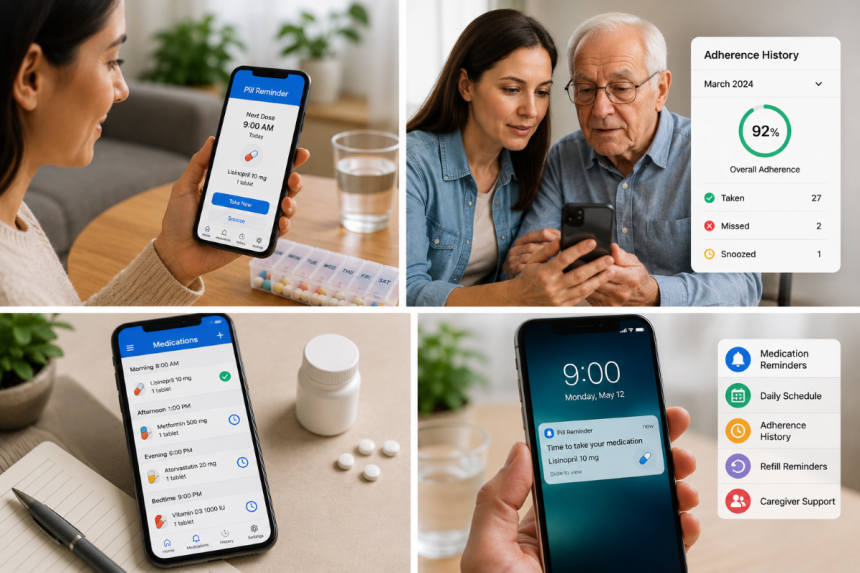

10 Powerful Benefits of a Pill Reminder for a Better Medication
Discover how a pill reminder can support a consistent medication routine with scheduled alerts, full-screen medication alarms, and simple digital organization.
Introduction
Remembering medication at the correct time can be challenging, especially for people with busy schedules or several daily medicines. Apill reminder can provide a simple way to organize medication times and receive helpful alerts throughout the day. Instead of depending only on memory, users can use digital reminders to create a more structured and consistent medication routine.
Pill Reminder provides a convenient way to organize scheduled medication reminders in one place. Features such as recurring alerts and full-screen medication alarms can help make reminders more noticeable and easier to manage.
What Is a Pill Reminder?
A pill reminder is a digital tool designed to help people remember when they need to take scheduled medication.
A reminder can be set for specific times and repeated according to a planned schedule. This can be useful for people who have several daily responsibilities or medications that need to be remembered at different times.
Common features may include:
- Medication time reminders
- Recurring alerts
- Multiple medication schedules
- Custom notification settings
- Full-screen medication alarms
- Daily medication schedules
- Reminder tracking
- Easy schedule updates
The available features depend on the specific reminder tool.
10 Powerful Benefits of a Pill Reminder1. Helps Build a Consistent Medication Routine
A regular medication routine can make daily medication management easier.
Instead of trying to remember medication times throughout the day, users can set reminders for their planned schedule.
For example:
- Morning reminder
- Afternoon reminder
- Evening reminder
- Bedtime reminder
A predictable routine can make medication tasks easier to fit into everyday life.
However, medication timing should always follow the instructions provided by a healthcare professional or medication label.
2. Reduces Reliance on Memory
People can forget important tasks when they are busy, distracted, traveling, or dealing with unexpected changes.
A pill reminder provides an additional prompt at the scheduled time.
For example, someone working on a busy project may not notice the time. A digital notification can remind them to check their medication schedule.
The reminder does not replace personal responsibility or professional medical advice. It simply provides an extra organizational tool.
3. Makes Multiple Medications Easier to Organize
Managing multiple medications can make a daily schedule complicated.
A pill reminder can help users organize different medications and their planned reminder times.
For example:
TimeScheduled Medication8:00 AMMedication A1:00 PMMedication B6:00 PMMedication C10:00 PMMedication D
The actual medication schedule should always be entered according to professional instructions.
Keeping information organized in one place can make the routine easier to review.
4. Provides Noticeable Full-Screen Medication Alarms
Some people may miss ordinary notifications because they are busy or have many alerts on their phones.
Full-screen medication alarms can provide a more prominent reminder when supported by the app and device.
A noticeable alarm can be useful when users need a clear visual prompt.
Depending on the application, reminder options may include:
- Sound alerts
- Visual notifications
- Full-screen alerts
- Repeating reminders
- Custom notification settings
Users should configure alerts according to their preferences and device settings.
5. Supports Long-Term Medication Schedules
Some medication routines continue for weeks, months, or longer.
Remembering the same schedule every day can become difficult over time.
Recurring reminders can reduce the need to manually create the same reminder every day.
For example, a user can establish a recurring morning reminder rather than entering a new alert each day.
If medication instructions change, the reminder schedule should be updated promptly according to professional guidance.
6. Helps Organize the Day
Medication is only one part of a person's daily schedule.
People may also need to manage:
- Work
- School
- Meals
- Exercise
- Appointments
- Family responsibilities
- Travel
A pill reminder can place medication tasks into this larger daily schedule.
This can make medication management feel more organized rather than like a separate task that has to be remembered independently.
7. Makes Digital Medication Tracking Convenient
A smartphone-based reminder can be easier to access than a paper note.
Depending on the tool, users may be able to:
- Add medications
- Edit reminder times
- Create recurring schedules
- Review reminders
- Organize medication information
Digital access can be particularly convenient for people who already use their smartphones throughout the day.
8. Can Support Caregivers and Family Members
Medication management can sometimes involve caregivers or family members.
A structured reminder system may help organize medication schedules when a person needs assistance.
For example, a caregiver may use a reminder tool to understand when a scheduled medication reminder should occur.
However, medication information is private and should only be shared with appropriate consent. Caregivers should also rely on accurate information from healthcare professionals rather than guessing about medication schedules.
9. Helps Make Medication Management More Structured
A clear schedule can make daily tasks easier to follow.
Instead of keeping medication information in several places, users can use a reminder tool as one organizational point.
A simple structure might include:
Medication: Name
Time: Scheduled time
Frequency: Daily or according to instructions
Reminder: Enabled
Keeping the information simple can make it easier to review.
10. Offers a Simple Alternative to Manual Reminders
Traditional reminders such as paper calendars, sticky notes, and alarms can be useful.
However, digital pill reminders can offer additional convenience through recurring notifications and organized schedules.
For example:
Traditional Method
Write "Medication at 8 AM" on a calendar.
Digital Method
Set a recurring reminder for the planned medication time.
Both approaches can work, but digital reminders can reduce the need for repeated manual setup.
How to Use a Pill Reminder Effectively
Using a pill reminder is generally straightforward.
Step 1: Add Your Medication
Enter the medication information carefully.
Step 2: Set the Correct Time
Use the medication schedule provided by your healthcare professional or medication packaging.
Step 3: Choose an Alert
Select an alert type that you are likely to notice.
Step 4: Enable Recurring Reminders
For regularly scheduled medication, recurring reminders can reduce manual work.
Step 5: Review Your Schedule
Check the reminder list regularly to make sure the information is current.
Step 6: Update Changes
If your healthcare professional changes your medication instructions, update the reminder accordingly.
Frequently Asked QuestionsWhat is a pill reminder?
A pill reminder is a digital or physical tool that helps users remember scheduled medication times.
Can a pill reminder improve a medication routine?
It can help organize scheduled reminders and make medication times easier to remember as part of a daily routine.
What are full-screen medication alarms?
Full-screen medication alarms are prominent digital alerts that can occupy more of the device screen when supported by the app and operating system.
Can I use a pill reminder for multiple medications?
Many reminder tools support multiple medications and different scheduled reminder times.
Can a pill reminder replace a doctor?
No. A reminder is an organizational tool and should never replace advice from a doctor, pharmacist, or other qualified healthcare professional.
What should I do if I miss a medication reminder?
Follow the instructions supplied with the medication or contact a pharmacist or healthcare professional for guidance. Do not automatically take an extra dose unless you have been instructed to do so.
Can Pill Reminder help organize medication times?
Yes. Pill Reminder can help users organize scheduled medication reminders and create a more structured daily routine.
Are digital pill reminders better than paper reminders?
Not necessarily. Both can be useful. Digital tools can provide additional features such as recurring alerts and smartphone notifications.
Conclusion
A pill reminder can make daily medication management more organized by providing scheduled alerts, recurring notifications, and convenient digital access. These tools can be especially useful for people who have busy schedules or need to manage multiple medication times.
Features such as full-screen medication alarms can make reminders more noticeable, while recurring alerts can support a consistent medication routine. However, reminder tools should only support a medication plan provided by a qualified healthcare professional.
With Pill Reminder, users can organize medication reminders in a simple digital system and make daily schedules easier to manage. By keeping information accurate, reviewing reminders regularly, and following professional medication instructions, users can build a more structured approach to everyday medication management.
For more detail visit:https://www.ganjingworld.com/article/1ipci4s8t025kkbJbzbhCb6Yi1pu1c
The Role of Acrylic Signs in Modern Office and Corporate Branding



Bagasse Pulp Price Trend Q3 2026 | Global Price Trends, Forecast, Char...


The Importance of Self Contained Breathing Apparatus in Firefighting a...